This is the fifth and final post in a series inspired by Todd Feinberg and Jon Mallatt's new book, 'The Ancient Origins of Consciousness: How the Brain Created Experience'. The previous posts were: What counts as consciousness? Predators and the rise of sensory consciousness Types of sensory consciousness The neural mechanics of sensory consciousness In the … Continue reading The range of conscious systems and the hard problem
Category: Mind and AI
The neural mechanics of sensory consciousness
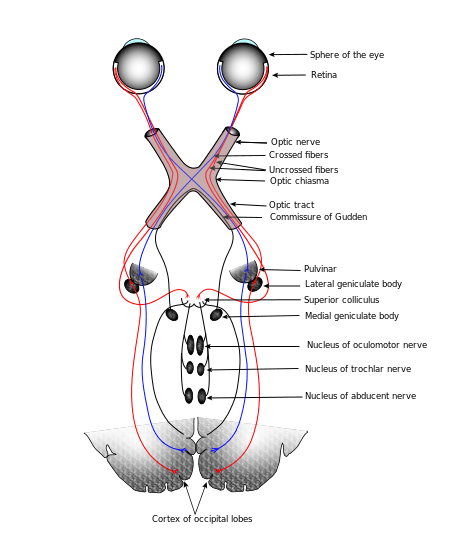
This is the fourth in a series of posts inspired by Todd Feinberg and Jon Mallatt's new book, 'The Ancient Origins of Consciousness: How the Brain Created Experience'. The first three were: What counts as consciousness? Predators and rise of sensory consciousness Types of sensory consciousness So, at this point in the series, we've talked about what … Continue reading The neural mechanics of sensory consciousness
Types of sensory consciousness

This is the third in a series of posts inspired by Todd Feinberg and Jon Mallatt's new book, 'The Ancient Origins of Consciousness: How the Brain Created Experience'. The first two were: What counts as consciousness? Predators and rise of sensory consciousness With this post, we're going to get into the different types of sensory … Continue reading Types of sensory consciousness
Predators and the rise of sensory consciousness
This is the second post in a series inspired by Todd Feinberg and Jon Mallatt's new book, 'The Ancient Origins of Consciousness: How the Brain Created Experience'. The first post in the series was: What counts as consciousness? Life appears to have gotten started fairly early in Earth's history. The oldest known fossils are now … Continue reading Predators and the rise of sensory consciousness
What counts as consciousness?
One of the things I get reminded of every few years, is that difficult determinations often look clearer when you consider them in a wider scope. Years ago, when I was trying to figure out whether conservative or progressive political policies were better, I discovered that widening my investigation to history helped immensely, and widening even further … Continue reading What counts as consciousness?
Libertarian free will is incoherent, and that’s good for responsibility
http://www.youtube.com/watch?v=vCGtkDzELAI For a while, I'd considered myself done debating free will, having expressed everything about it I had to say. However, with this Crash Course video, and in light of the discussion on physicality we had earlier this summer, I realized I do have some additional thoughts on it. Just a quick reminder: I'm a compatibilist. I'm convinced … Continue reading Libertarian free will is incoherent, and that’s good for responsibility
The challenges of copying a mind
Michael Graziano has an article at the Atlantic looking at the plausibility of mind copying. He doesn't beat around the bush, going all in with the title: Why You Should Believe in the Digital Afterlife, although the actual text of the article is more nuanced, and echoes what I hear from most neuroscientists. As a neuroscientist, … Continue reading The challenges of copying a mind
Damasio’s theory of consciousness
Antonio Damasio is a neuroscientist and neurologist who has published a number of theories about how the brain and mind work. Unlike many theories of mind, his are thoroughly grounded in neuroanatomy. Central to Damasio's theory of consciousness is the idea of biological value, that which helps in preserving homeostasis, which of course aids in … Continue reading Damasio’s theory of consciousness
What would it mean for a machine to suffer?
One of the dividing lines I often hear in discussions about whether we should regard an artificially intelligent machine as a fellow being is, does it have the capacity to suffer? It's an interesting criteria, since it implies that what's important is that there be something there for us to empathize with. But it raises an interesting question. … Continue reading What would it mean for a machine to suffer?
Consciousness is composed of non-consciousness
The components of a thing are not individually the thing. For example, the components of the chair I type most of my blog posts from are not the chair itself, but the wood of the frame, the springs for the back and bottom, some metal parts for the reclining mechanism, the fabric coverings, cushions, etc. … Continue reading Consciousness is composed of non-consciousness
 SelfAwarePatterns