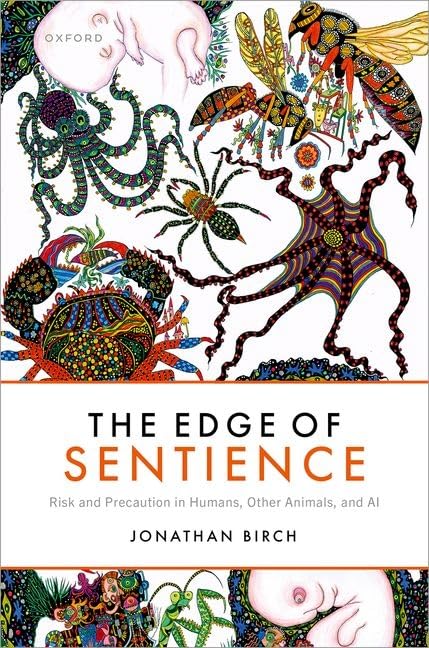
I'm currently reading Jonathan Birch's The Edge of Sentience, a book focusing on the boundary between systems that can feel pleasure or pain, and those that can't, and the related ethics. While this is a subject I'm interested in, I'm leery of the activism the animal portions of it attract. I have nothing in particular … Continue reading The semantic indeterminacy of sentience
Category: Mind and AI
Classic and connectionist computationalism
Spurred by a couple of recent conversations, I've been thinking about computation in the brain. It was accelerated this week by the news that the connectome of the fly brain is complete, a mapping of its 140,000 neurons and 55 million synapses. It's a big improvement over the 302 neurons of the C. Elegans worm, … Continue reading Classic and connectionist computationalism
The problem with the knowledge argument
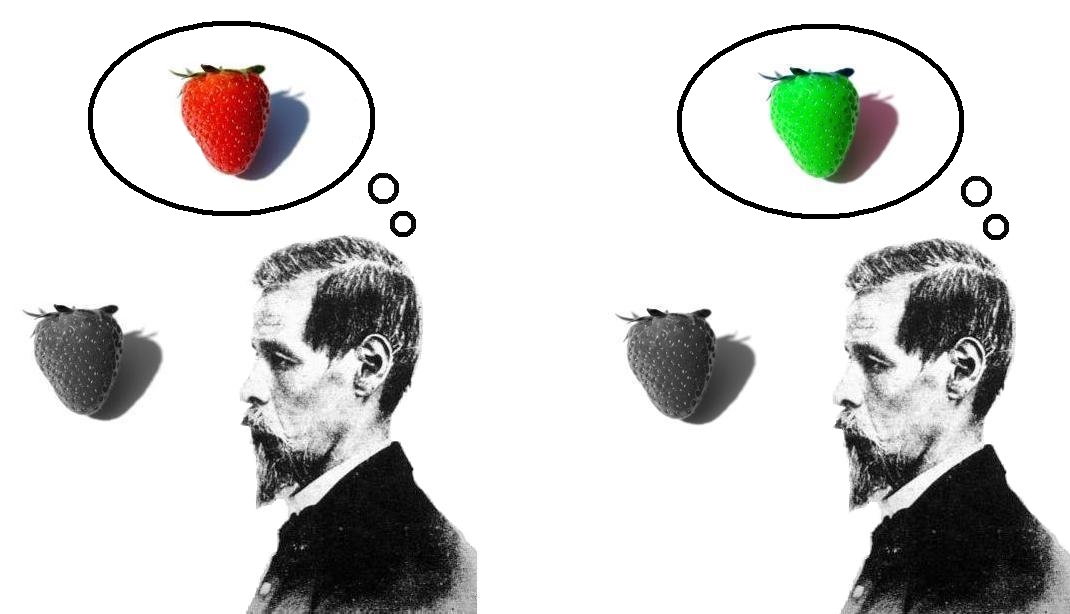
What does the knowledge argument actually demonstrate? The argument, which shows up in various forms in numerous philosophical papers and thought experiments, is that we can have a complete physical understanding of a conscious being, but still not know how it feels to be that being. We can know everything about a bat's nervous system, … Continue reading The problem with the knowledge argument
Experience and behavior
Is studying conscious experience different from studying behavior? In a number of recent conversations I've had, the distinction between experience and behavior has come up. There's a strong sentiment that we can study behavior scientifically, including all the intermediate mental states that enable it. But experience is seen as something distinct from that, something that … Continue reading Experience and behavior
Illusionism and functionalism
In the last thread, someone asked what exactly is it about consciousness that illusionists say is illusory? One quick answer is that for illusionists, the properties people see in experience that incline us to think that consciousness is a metaphysically hard problem, are what's illusory. In weak illusionism, the properties aren't what they seem. In … Continue reading Illusionism and functionalism
Illusionism and types of physicalism
Can we in principle ever deduce the mental from the physical? Christopher Devlin Brown and David Papineau have a new paper out in the Journal of Consciousness Studies titled: Illusionism and A Posteriori Physicalism; No Fact of the Matter. (Note: the link is to a free version.) As the title makes clear, the overall gist … Continue reading Illusionism and types of physicalism
AI intelligence, consciousness, and sentience
Can the possibility of AI consciousness be ruled out? Anil Seth has a new preprint on the question of AI consciousness. Seth is skeptical about AI consciousness, although he admits that he can't rule it out completely. He spends some time attacking computational functionalism, the view that mental states are functional in nature, that they … Continue reading AI intelligence, consciousness, and sentience
The scope of free will
Maybe the free will debate is really about the scope of causal influences on our decisions. With Daniel Dennett's death, a lot of podcasters have been replaying his interviews, many of which concern his stance as a free will compatibilist. That and a recent Mind Chat episode focused on Kevin Mitchell's strong emergence understanding of … Continue reading The scope of free will
Consciousness must be adaptive
The New York Declaration on Animal Consciousness has been making a lot of headlines. The declaration itself has somewhat careful language in terms of what it's asserting, but many of the headlines don't. The declaration is short, so it's easy to quote in full. Which animals have the capacity for conscious experience? While much uncertainty … Continue reading Consciousness must be adaptive
Some thoughts on Daniel Dennett’s ideas
Yesterday Daniel Dennett died. He was 82, about the same age as my father when he died a few years ago. I think I've mentioned before that the first writer I read on consciousness was Susan Blackmore. But I know Dennett wasn't far behind, likely based on Blackmore's positive discussions of his work, but also … Continue reading Some thoughts on Daniel Dennett’s ideas