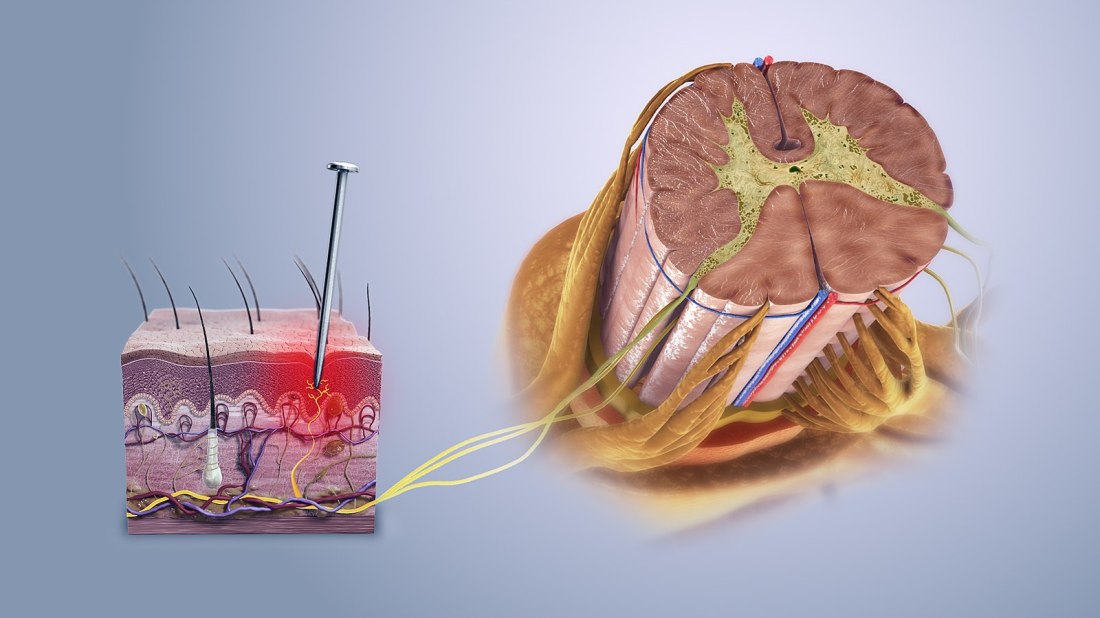
From an evolutionary standpoint, why does pain exist? The first naive answer most people reach for is that pain exists to make us take action to prevent damage. If we touch a hot stove, pain makes us pull our hand back. But that's not right. When we touch a hot surface, nociceptors in our hand … Continue reading Pain is information, but what is information?
Category: Philosophy
Is the ultimate nature of reality mental?
Philosopher Wilfrid Sellars had a term for the world as it appears, the "manifest image." This is the world as we perceive it. In it, an apple is an apple, something red or green with a certain shape, a range of sizes, a thing that we can eat, or throw. The manifest image can be … Continue reading Is the ultimate nature of reality mental?
Platonism and the non-physical
On occasion, I've been accused of being closed-minded. (Shocking, I know.) Frequently the reason is not seriously considering non-physical propositions, a perception of rigid physicalism. However, as I've noted before, I'm actually not entirely comfortable with the "physicalist" label (or "materialist", or other synonyms or near synonyms). While it's fairly accurate as to my working … Continue reading Platonism and the non-physical
Inflate and explode, or deflate and preserve?
Philosopher Eric Schwitzgebel has an interesting post up criticizing the arguments of illusionists, those who have concluded that phenomenal consciousness is an illusion. Here's a way to deny the existence of things of Type X. Assume that things of Type X must have Property A, and then argue that nothing has Property A. If that … Continue reading Inflate and explode, or deflate and preserve?
What is knowledge?
In the discussion on the last post on measurement, the definition of knowledge came up a few times. That's dredged up long standing thoughts I have about knowledge, which I've discussed with some of you before, but that I don't think I've ever actually put in a post. The ancient classic definition of knowledge is … Continue reading What is knowledge?
Are there things that are knowable but not measurable?
It's a mantra for many scientists, not to mention many business managers, that if you can't measure it, it's not real. On the other hand, I've been told by a lot of people, mostly non-scientists, and occasionally humanistic scholars including philosophers, that not everything knowable is measurable. But what exactly is a measurement? My intuitive understanding … Continue reading Are there things that are knowable but not measurable?
What do scientific theories actually tell us about the world?
One of the things that's exciting about learning new things, is that often a new understanding in one area sheds light on what might seem like a completely separate topic. For me, information about how the brain works appears to have shed new light on a question in the philosophy of of science, where there has long … Continue reading What do scientific theories actually tell us about the world?
Libertarian free will is incoherent, and that’s good for responsibility
http://www.youtube.com/watch?v=vCGtkDzELAI For a while, I'd considered myself done debating free will, having expressed everything about it I had to say. However, with this Crash Course video, and in light of the discussion on physicality we had earlier this summer, I realized I do have some additional thoughts on it. Just a quick reminder: I'm a compatibilist. I'm convinced … Continue reading Libertarian free will is incoherent, and that’s good for responsibility
Don’t trust your emotions. They will betray you.
I've mentioned before that my views have changed dramatically over the years. But thinking about that the other day, it occurred to me that most of that change happened in a fairly narrow period. At the beginning of 2004, I was still a nominal Catholic, often voted Republican, was suspicious of gays and other non-traditional groups, and … Continue reading Don’t trust your emotions. They will betray you.
What would evidence for the non-physical look like? A possible answer.
In the last post, I pondered what distinction between the physical and non-physical, noting that I've historically resisted the label of "physicalist" or "materialist" maintaining that, if any evidence for the non-physical ever did become available, I'd accept its existence. I finished my post asking what that evidence might look like? And if even asking … Continue reading What would evidence for the non-physical look like? A possible answer.