In any online conversation about consciousness, sooner or later someone is going to bring up philosophical zombies as an argument for consciousness being non-physical, or at least some portion of it. The Stanford Encyclopedia of Philosophy introduces the p-zombie concept as follows: Zombies in philosophy are imaginary creatures designed to illuminate problems about consciousness and its relation … Continue reading The problems with philosophical zombies
Tag: Philosophy
The range of conscious systems and the hard problem
This is the fifth and final post in a series inspired by Todd Feinberg and Jon Mallatt's new book, 'The Ancient Origins of Consciousness: How the Brain Created Experience'. The previous posts were: What counts as consciousness? Predators and the rise of sensory consciousness Types of sensory consciousness The neural mechanics of sensory consciousness In the … Continue reading The range of conscious systems and the hard problem
The neural mechanics of sensory consciousness
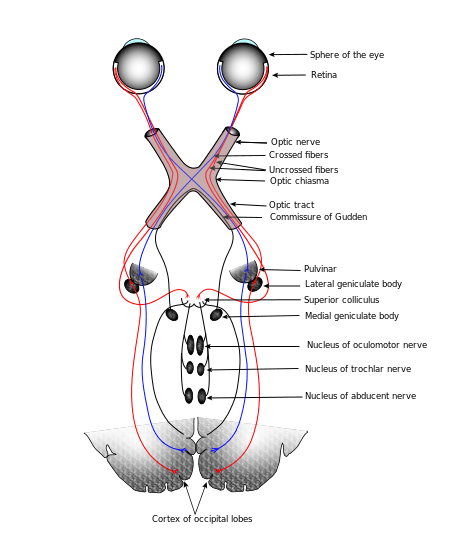
This is the fourth in a series of posts inspired by Todd Feinberg and Jon Mallatt's new book, 'The Ancient Origins of Consciousness: How the Brain Created Experience'. The first three were: What counts as consciousness? Predators and rise of sensory consciousness Types of sensory consciousness So, at this point in the series, we've talked about what … Continue reading The neural mechanics of sensory consciousness
Types of sensory consciousness

This is the third in a series of posts inspired by Todd Feinberg and Jon Mallatt's new book, 'The Ancient Origins of Consciousness: How the Brain Created Experience'. The first two were: What counts as consciousness? Predators and rise of sensory consciousness With this post, we're going to get into the different types of sensory … Continue reading Types of sensory consciousness
Predators and the rise of sensory consciousness
This is the second post in a series inspired by Todd Feinberg and Jon Mallatt's new book, 'The Ancient Origins of Consciousness: How the Brain Created Experience'. The first post in the series was: What counts as consciousness? Life appears to have gotten started fairly early in Earth's history. The oldest known fossils are now … Continue reading Predators and the rise of sensory consciousness
What counts as consciousness?
One of the things I get reminded of every few years, is that difficult determinations often look clearer when you consider them in a wider scope. Years ago, when I was trying to figure out whether conservative or progressive political policies were better, I discovered that widening my investigation to history helped immensely, and widening even further … Continue reading What counts as consciousness?
Don’t trust your emotions. They will betray you.
I've mentioned before that my views have changed dramatically over the years. But thinking about that the other day, it occurred to me that most of that change happened in a fairly narrow period. At the beginning of 2004, I was still a nominal Catholic, often voted Republican, was suspicious of gays and other non-traditional groups, and … Continue reading Don’t trust your emotions. They will betray you.
The challenges of copying a mind
Michael Graziano has an article at the Atlantic looking at the plausibility of mind copying. He doesn't beat around the bush, going all in with the title: Why You Should Believe in the Digital Afterlife, although the actual text of the article is more nuanced, and echoes what I hear from most neuroscientists. As a neuroscientist, … Continue reading The challenges of copying a mind
What would evidence for the non-physical look like? A possible answer.
In the last post, I pondered what distinction between the physical and non-physical, noting that I've historically resisted the label of "physicalist" or "materialist" maintaining that, if any evidence for the non-physical ever did become available, I'd accept its existence. I finished my post asking what that evidence might look like? And if even asking … Continue reading What would evidence for the non-physical look like? A possible answer.
What is physicalism?
One label that often gets applied to me is "materialist", or sometimes "physicalist." It's a label that, while it probably gives an accurate idea of my conception of reality, I've generally resisted. Why? Because if there were ever any evidence for anything non-physical, I would accept its existence. Consequently, I've often felt that a better label … Continue reading What is physicalism?
 SelfAwarePatterns