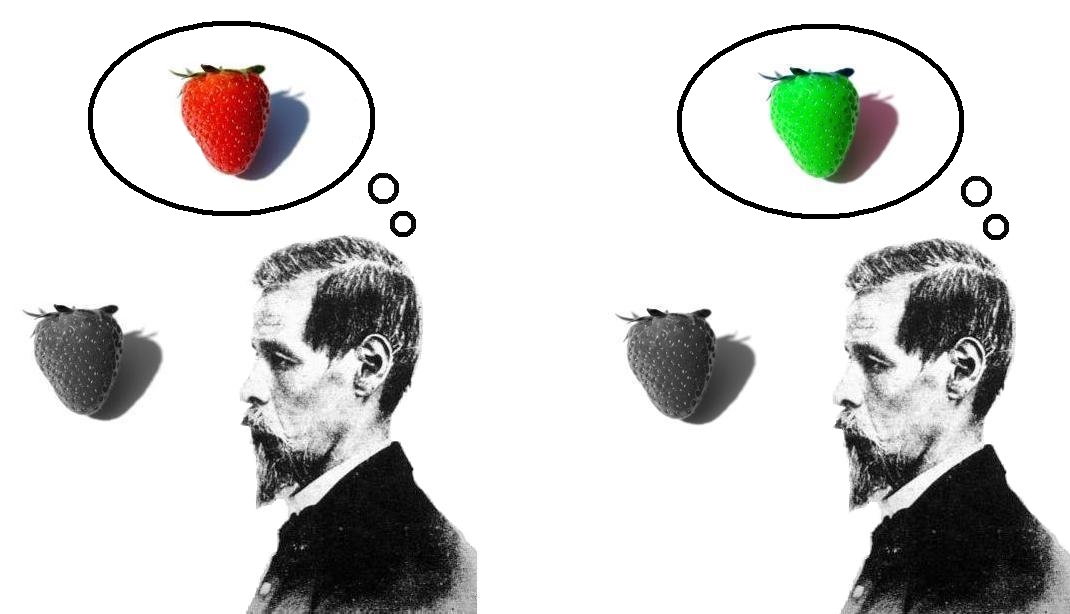
I think the problem of consciousness is primarily one of definition. The word "consciousness" can refer to a range of concepts. Some of the concepts are scientifically tractable, while others, once we clarify them, are metaphysical assumptions that we can either choose to hold or dismiss. This is one of the reasons I find exploring … Continue reading Manifest and fundamental consciousness
Tag: Qualia
The problem with the knowledge argument
What does the knowledge argument actually demonstrate? The argument, which shows up in various forms in numerous philosophical papers and thought experiments, is that we can have a complete physical understanding of a conscious being, but still not know how it feels to be that being. We can know everything about a bat's nervous system, … Continue reading The problem with the knowledge argument
Illusionism and functionalism
In the last thread, someone asked what exactly is it about consciousness that illusionists say is illusory? One quick answer is that for illusionists, the properties people see in experience that incline us to think that consciousness is a metaphysically hard problem, are what's illusory. In weak illusionism, the properties aren't what they seem. In … Continue reading Illusionism and functionalism
The function of color
In the history of discussions about consciousness, there have always been ideas that some aspects of human experience are irreducible to physics. Colors have long had a special place in these discussions. During the scientific revolution, colors lost their status as objective properties in the world, with people like Galileo relegating them to secondary qualities … Continue reading The function of color
The debate between phenomenal realism and illusionism, and the scope of perceptual properties
In the last post, I pondered the idea that the real difference between a realist and anti-realist stance toward a scientific theory is about how broad or narrow the scope of the theory might be, about it's domain of applicability. An anti-realist takes a narrower view on scope; such as that the theory can be … Continue reading The debate between phenomenal realism and illusionism, and the scope of perceptual properties
What does it mean to be “like something”?
When it comes to my philosophy of consciousness, I've noted many times that I'm a functionalist, someone who sees mental states, including conscious ones, as being more about what they do, their causal roles and relations, than what they are. Since functionalism focuses on functionality exclusively, it often gets lumped in with illusionism, which typically … Continue reading What does it mean to be “like something”?
The function of qualia
Often when I mention that I'm a functionalist in terms of the mind, someone references the Stanford Encyclopedia entry on functionalism. Strange to say, but I've never gone through that entire entry. This week I poked around a little in it, mostly in the objections section. Most of the objections either strike me as more … Continue reading The function of qualia
The problem with Mary’s room
For some reason, Mary's room has been garnering attention lately. This TED Ed video on it was shared on Aeon's site this week. https://www.youtube.com/watch?v=mGYmiQkah4o The wording of the actual thought experiment is important, so quoting Frank Jackson's words (via the Wikipedia article on the knowledge argument): Mary is a brilliant scientist who is, for whatever reason, … Continue reading The problem with Mary’s room
Do qualia exist? Depends on what we mean by “exist.”
The cognitive scientist, Hakwan Lau, whose work I've highlighted several times in the last year, has been pondering illusionism recently. He did a Twitter survey on the relationship between the phenomenal concept strategy (PCS) and illusionism, which inspired my post on the PCS. (Meant to mention that in the post, but it slipped.) Anyway, he's … Continue reading Do qualia exist? Depends on what we mean by “exist.”
A possible answer to the hard problem of consciousness: subjective experience is communication
In 1995, David Chalmers coined the "hard problem of consciousness": It is undeniable that some organisms are subjects of experience. But the question of how it is that these systems are subjects of experience is perplexing. Why is it that when our cognitive systems engage in visual and auditory information-processing, we have visual or auditory … Continue reading A possible answer to the hard problem of consciousness: subjective experience is communication