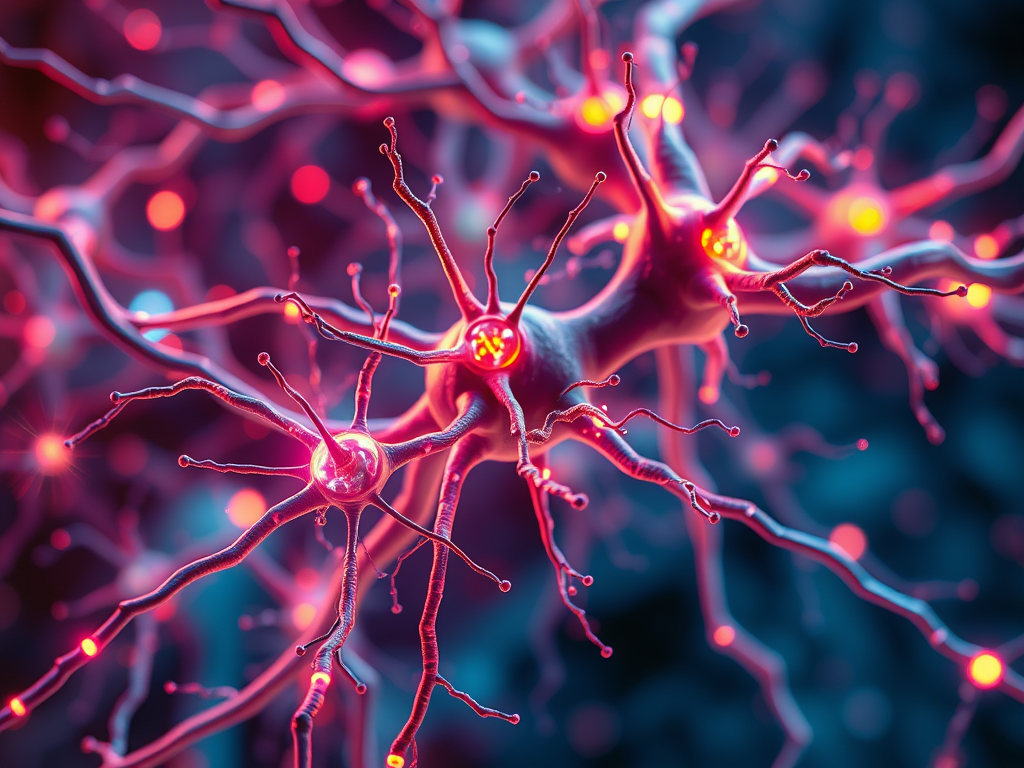
A number of recent conversations, some I've been in, and others witnessed, left me thinking about eliminative views like the strong illusionism of Keith Frankish and Daniel Dennett. This is the view that access consciousness, the availability of information for verbal report, reasoning, and behavior, exists. But phenomenal consciousness, the qualia, the what it's like … Continue reading Is the eliminative stance productive?

Tag: Philosophy
The attitude of physicalism
Spurred by conversations a few weeks ago, I've been thinking about physicalism, the stance that everything is physical, that the physical facts fix all the facts. A long popular attack against this view has been to argue that it's incoherent, since we can't give a solid definition of what "physical" means. And so physicalism seems … Continue reading The attitude of physicalism
Chill about metaphysics
This week I had to block a couple of people on different platforms. Neither seemed able to make their point without lacing in insults. One seemed to be on a mission to make me feel as bad about my outlook as possible. The disagreements were on purely metaphysical grounds, physicalism vs non-physicalism. And seem to … Continue reading Chill about metaphysics
If usefulness isn’t a guide to what’s real, what is?
Seems like I've been writing a lot about quantum mechanics lately. Apparently so have a lot of other people. One thing that keeps coming up is the reality or non-reality of the quantum wave function. Raoni Arroyo and Jonas R. Becker Arenhart argue for non-reality: Quantum mechanics works, but it doesn't describe reality: Predictive power … Continue reading If usefulness isn’t a guide to what’s real, what is?
Biological computation and the nature of software
A new paper is been getting some attention. It makes the case for biological computation. (This is a link to a summary, but there's a link to the actual paper at the bottom of that article.) Characterizing the debate between computational functionalism and biological naturalism as camps that are hopelessly dug in, the authors propose … Continue reading Biological computation and the nature of software
Why I’m a reductionist
The SEP article on scientific reductionism notes that the etymology of the word "reduction" is "to bring back" something to something else. So in a methodological sense, reduction is bringing one theory or ontology back to a simpler or more fundamental theory or ontology. The Wikipedia entry on reductionism identifies different kinds: ontological, methodological, and … Continue reading Why I’m a reductionist
Everything is a quantum wave?
In the last post, I discussed Amanda Gefter's critique of Vlatko Vedral's view that observers have no special role in reality. Conveniently, Vedral published an article at IAI discussing his view: Everything in the universe is a quantum wave. (Warning: possible paywall.) Vedral puts his view forward as a radical new interpretation of quantum mechanics. … Continue reading Everything is a quantum wave?
Does reality require observers?
Amanda Gefter has an article at Nautilus a couple of you have asked me about: Reality Exists Without Observers? Boooo! The title is an accurate summary of her thesis. Gefter is responding to a book by Vlatko Vedral, where he reportedly argues for a reality that doesn't require observers. In terms of quantum mechanics, Vedral … Continue reading Does reality require observers?
Maybe we’re already part of a hive mind
I recently discovered the new TV show Pluribus, about a scenario where the whole world gets turned into a hive mind, an annoyingly nice one, at least in the initial episodes, but where a few humans turn out to be immune to the virus that converts everyone else, including the cantankerous protagonist, Carol Sturka. The … Continue reading Maybe we’re already part of a hive mind
Why I still think Turing’s insight matters
Nature has an article noting that language models have killed "the Turing test" and asking if we even need a replacement. I think the article makes some good points. But a lot of the people quoted seem to take the opportunity to dismiss Turing's whole idea. I think this is a mistake. First, we need … Continue reading Why I still think Turing’s insight matters