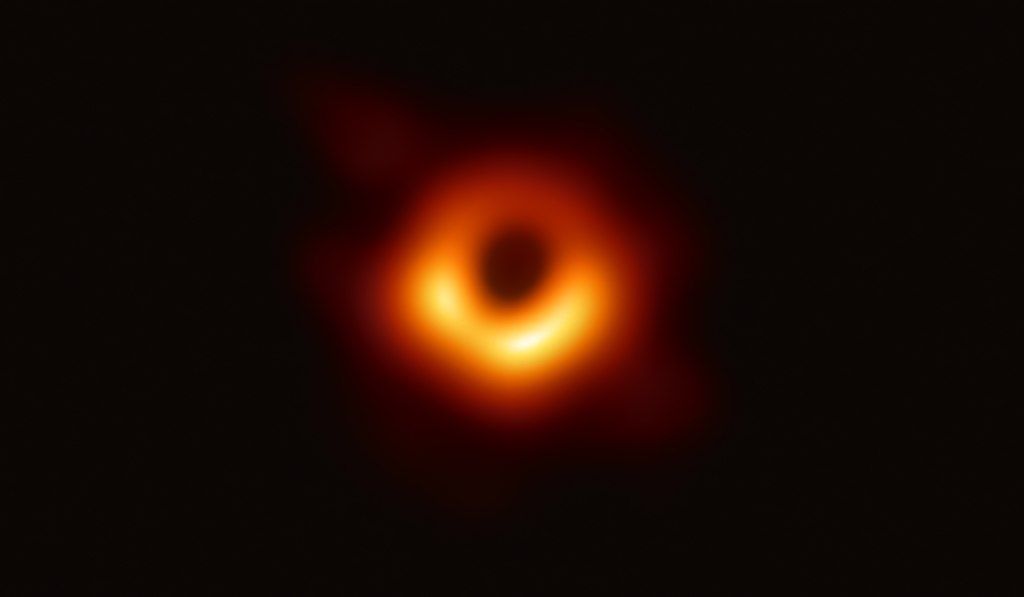
The black hole information paradox has been receiving some attention lately. This is the fact that information, that is any pattern of matter, that falls into a black hole is completely crushed as it approaches the singularity, losing whatever differentiation it might have had before. This has long been recognized as a problem, because in … Continue reading A basic question on the black hole information paradox
Author: SelfAwarePatterns
An election fit for 2020
Well, that's a relief. Even though there were warnings for weeks and months before the election about a "red mirage" that might happen election night, a result of Trump supporters voting on election day and Biden supporters voting heavily by mail, and the order in which the ballots would be counted, even though many of … Continue reading An election fit for 2020
A PBS Space Time series on time and the block universe
Somewhat related to the previous post, I just saw this video from Matt O'Dowd discussing why the block universe is such a compelling concept. https://www.youtube.com/watch?v=EagNUvNfsUI&t=12s The second video in the series discusses the effect quantum mechanics might have on this concept. It reminds me why cosmologists seem to be more comfortable with the Many Worlds … Continue reading A PBS Space Time series on time and the block universe
The block universe is interesting, but not comforting
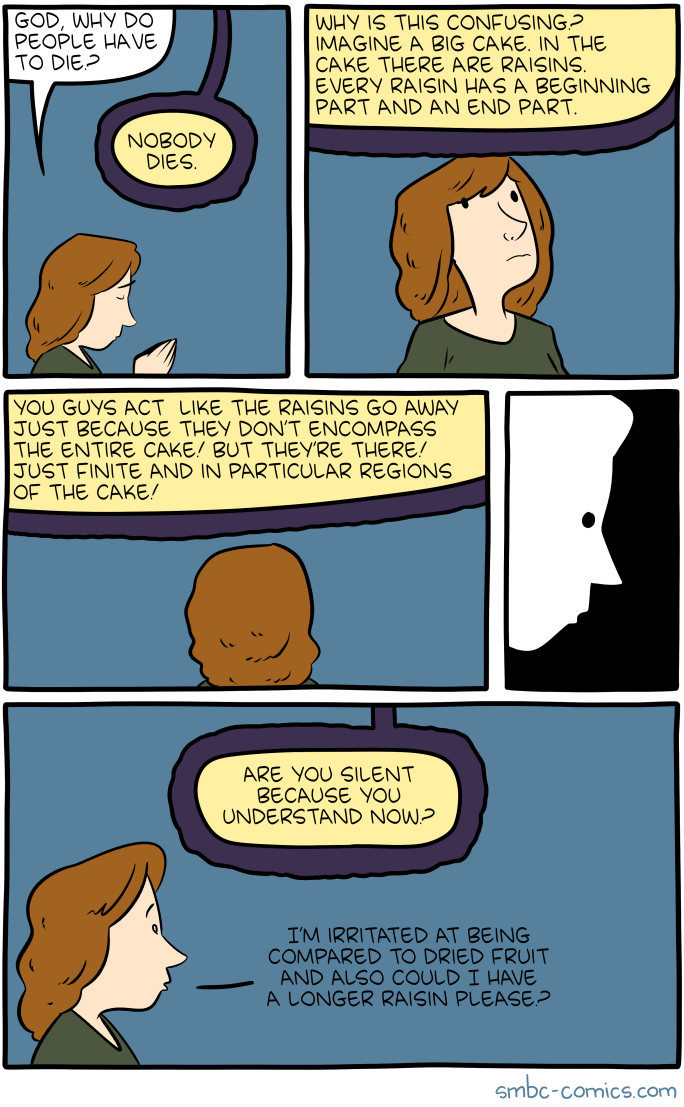
Click through for source and bonus red button caption at smbc-comics.com. This SMBC gets at something that's often bothered me about the way many people talk about the block universe concept. The block universe is the idea that if the universe is fully deterministic, then its entire history from beginning to end exists in an … Continue reading The block universe is interesting, but not comforting
The iron rule of science?
I'm always interested in new takes on the demarcation between science and non-science, so after seeing the New Yorker write up on Michael Strevens' new book, The Knowledge Machine: How Irrationality Created Modern Science, it seemed like something I needed to read. Strevens begins by examining the two leading theories of science: Karl Popper's falsifiability … Continue reading The iron rule of science?
Voting in the general election, 2020 edition
I voted. I did early voting, although I would have preferred to have voted by mail. However, my state's Republican dominated legislature did everything they could to prevent that. The state only offered mail-in voting after they lost a lawsuit, and then only for relatively narrow cases. To do it, I would have had to … Continue reading Voting in the general election, 2020 edition
The beginnings of purpose
Michael Levin and Daniel Dennett have an interesting article up at Aeon, on the right way to talk about purpose and cognition in biology, particularly in simple organisms and lower level mechanisms. The core thesis is that an organism, at any level, all the way down to a single cell, is an agent, with its … Continue reading The beginnings of purpose
Thoughts about quantum computing and the wave function
The main difference between a quantum computer and a classical one is the qubit. Qubits are like classical bits, in that they hold binary values of either 1 or 0, on or off, true or false, etc. However, qubits, being quantum objects, can be in a superposition of both states at once. The physical manifestation … Continue reading Thoughts about quantum computing and the wave function
The centrality of fear in nature
Anyone who's ever interacted with a wild animal knows how skittish they are compared to any domestic animal. I think of the squirrels on my university's campus. In general, people leave the squirrel population alone there, so they tend not to be afraid of humans. Although there are still occasional predators, such as cats, dogs, … Continue reading The centrality of fear in nature
The consciousness of crows
Last week, Science Magazine published an interesting study on bird consciousness: A neural correlate of sensory consciousness in a corvid bird. The study conducted an experiment where crows were trained to respond to a sensory stimulus. The stimulus itself could be at the threshold of perceptibility, above that threshold, or missing. After the stimulus (or … Continue reading The consciousness of crows