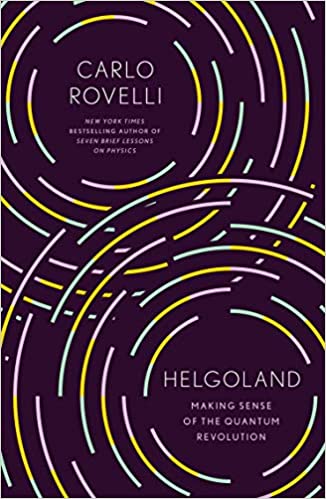
I've posted a lot over the years on interpretations of quantum mechanics. My writing has tended to focus on comparing the big three: Copenhagen, pilot-wave, and many-worlds. But there are a lot of others. One that has been gaining converts among physicists and others is Carlo Rovelli's relational quantum mechanics (RQM) interpretation. This is an … Continue reading Carlo Rovelli’s Helgoland
Category: Science
Structural realism, a way to be a scientific realist?
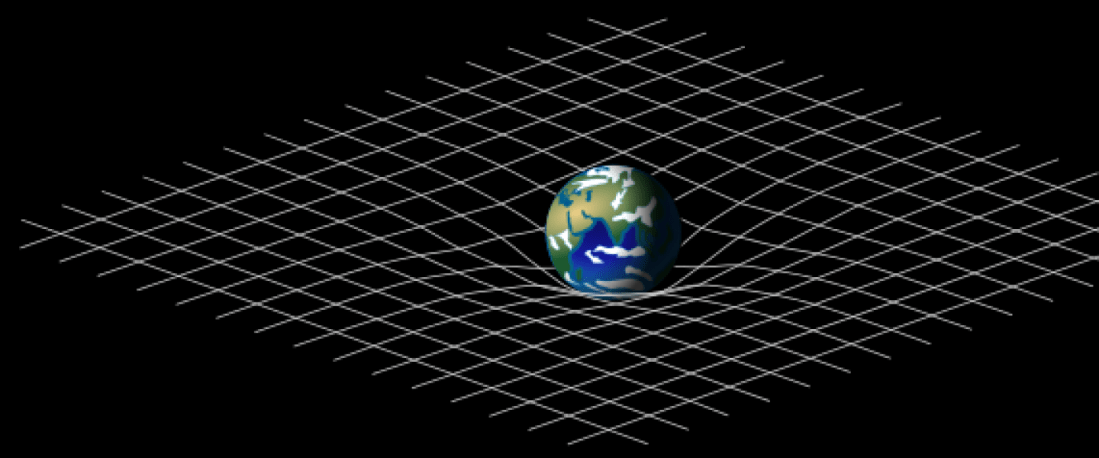
In the scientific realism vs instrumentalism debate, realism is the position that the elements of a scientific theory represent reality. So when general relativity talks about space warping, space really is warping. Instrumentalism, or anti-realism, is the stance that scientific theories are just prediction mechanisms, with no guarantee that they represent reality. Under instrumentalism, general … Continue reading Structural realism, a way to be a scientific realist?
An instrumentalist Everettian
Scott Aaronson posted an interesting piece this week coming out about his favorite interpretation of quantum mechanics. I think the most relevant part is this snippet. (Although the full piece has a lot of nuance well worth reading.) I don’t mean to say that the interpretations are all interchangeable, or equally good or bad. If … Continue reading An instrumentalist Everettian
The nature of splitting worlds in the Everett interpretation
This post is about an aspect of the Everett many-worlds interpretation of quantum mechanics. I've given brief primers of the interpretation in earlier posts (see here or here), in case you need one. Sean Carroll, as he does periodically, did an AMA on his podcast. He got a number of questions on the Everett interpretation, … Continue reading The nature of splitting worlds in the Everett interpretation
Scientific theories and prescriptive vs descriptive instrumentalism
Those of you who've known me a while may remember that I dislike accepting philosophical labels. For example, although the labels "materialist" or "physicalist" are more or less accurate descriptions of what I think, they often seem to imply an ideological rigidity I'm not comfortable with. My attitude toward these labels somewhat resonates with Neil … Continue reading Scientific theories and prescriptive vs descriptive instrumentalism
Mea culpa on quantum decoherence
Lately, I've been trying to gain a better understanding of quantum decoherence. This is the process of a quantum system in superposition interacting with the environment and, as a result, appearing to lose its quantum nature, notably by having interference between the elements of its superposition become undetectable. Decoherence is often used synonymously with the … Continue reading Mea culpa on quantum decoherence
The nature of quantum nonlocality
Quantum physics has been on my mind again lately, somewhat triggered by a recent conversation with Wyrd Smythe on his blog. I've always known quantum nonlocality has nuances, but stuff I read this week revealed some wrinkles I wasn't aware of. (Well, I was aware of them, but wasn't aware they pertained to nonlocality.) A … Continue reading The nature of quantum nonlocality
Thoughts about quantum computing and the wave function
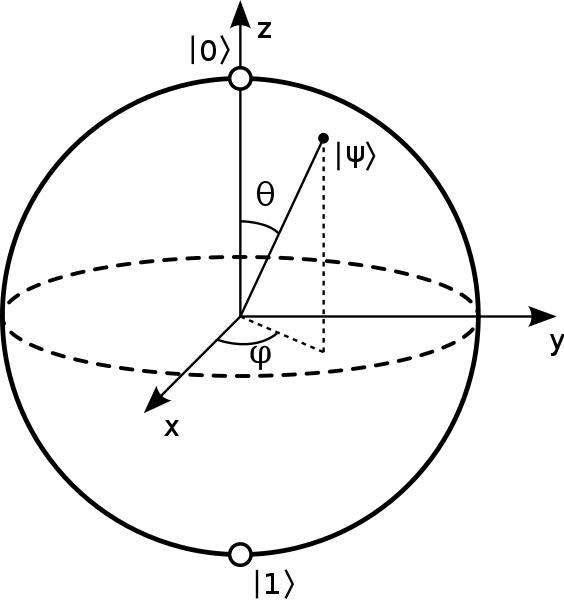
The main difference between a quantum computer and a classical one is the qubit. Qubits are like classical bits, in that they hold binary values of either 1 or 0, on or off, true or false, etc. However, qubits, being quantum objects, can be in a superposition of both states at once. The physical manifestation … Continue reading Thoughts about quantum computing and the wave function
Quantum Reality
I just finished reading Jim Baggott's new book Quantum Reality: The Quest for the Real Meaning of Quantum Mechanics - a Game of Theories. I was attracted to it due to this part of the description: Although the theory quite obviously works, it leaves us chasing ghosts and phantoms; particles that are waves and waves … Continue reading Quantum Reality
The spectrum of science to fantasy
A question long argued in the philosophy of science is the demarcation problem. How to we distinguish science from non-science? Karl Popper famously proposed falsifiability as a criteria. To be science, a theory must make predictions that could turn out to be wrong. It must be falsifiable. Theories that are amorphous or flexible enough to … Continue reading The spectrum of science to fantasy