(Warning: consciousness theory weeds.) A new paper in the journal Cognitive Neuroscience: Hard criteria for empirical theories of consciousness, takes a shot at proposing criteria for assessing scientific theories of consciousness. The authors make clear at the beginning that they're aiming their criteria at empirical theories, rather than metaphysical ones. So they make no attempt … Continue reading Hard criteria for theories of consciousness?
Category: Zeitgeist
The ecological disaster of Homo sapiens

I'm finally heeding all the recommendations and reading Yuval Noah Harari's Sapiens: A Brief History of Humankind. Harari is an excellent writer, and though at times he seems to present some unproven hypotheses as proven fact, and nine years after initial publication some of the information feels a bit dated, he makes up for it … Continue reading The ecological disaster of Homo sapiens
Kurzgesagt on intelligence, and prospects for engineered intelligence
It's pretty nice to see Kurzgesagt finally continuing its "Big Questions of Life and the Universe" series. I shared the first part on consciousness over a year go. The series is funded by the Templeton Foundation, which I know many people have issues with, but so far the content has been reasonably scientific. https://www.youtube.com/watch?v=ck4RGeoHFko As … Continue reading Kurzgesagt on intelligence, and prospects for engineered intelligence
Does conscious AI deserve rights?

This is an interesting video from Big Think. It features discussion from a variety of thinkers like Richard Dawkins, Peter Singer, Susan Schneider, and others, including a lot of intelligent remarks from someone I wasn't familiar with until now, Joanna Bryson. https://www.youtube.com/watch?v=ETVr_lpIMO0 Consciousness lies in the eye of the beholder. There is no universally agreed … Continue reading Does conscious AI deserve rights?
There is no phenomenality without access

How do we know whether any particular system is conscious? In humans, we typically know because most humans can talk about their conscious experience. Historically, if we can report on it, it's conscious; if we can't, it's in the unconscious. But this raises a difficulty for any entity that doesn't have language, including non-human animals, … Continue reading There is no phenomenality without access
Communication and hypothetical thinking

Keith Frankish has an interesting article at Psyche pondering what ability separates modern humanity from archaic humans (such as homo erectus). His vote is hypothetical thinking. From the article: The ability I mean is that of hypothetical thinking – the ability to detach one’s mind from the here and now, and consciously think about other … Continue reading Communication and hypothetical thinking
36 civilizations in the galaxy?
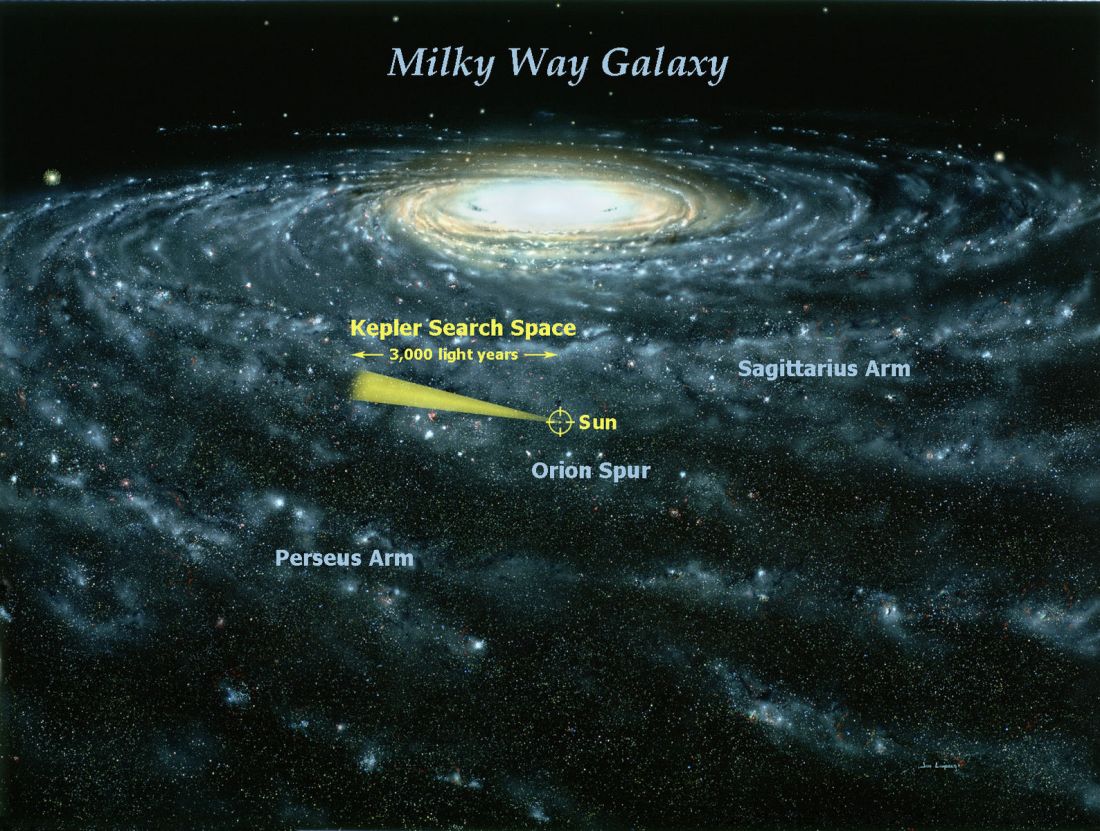
A new analysis is getting some attention, one claiming to have refined the old Drake equation and produced firmer numbers, leading to this conclusion: Under the strictest set of assumptions – where, as on Earth, life forms between 4.5bn and 5.5bn years after star formation – there are likely between four and 211 civilisations in … Continue reading 36 civilizations in the galaxy?
Assembly Calculus: the missing link between mind and brain?

Read any mainstream neuroscience book, and one of the things you'll typically see is an admission that while a lot is known about the operations of neurons and synapses, and a lot about high level signalling patterns in various brain regions, along with a good amount on how sensory processing happens in some regions (such … Continue reading Assembly Calculus: the missing link between mind and brain?
Attention and what we should expect from theories of the mind

Aeon, in their weekend newsletter, highlighted an old article from Carolyn Dicey Jennings on attention and the self. I recall reading this article when it was published, but apparently didn't share or discuss it, I suspect because I had mixed feelings about it. I still do. Consciousness scientists have a tendency to look at attention … Continue reading Attention and what we should expect from theories of the mind
The necessary attributes of a responsible agent

George Ellis has an article at Aeon on free will that is garnering some attention. Ellis' case is a fairly classic one. Brain are complex systems whose operations, due to chaotic and stochastic dynamics, cannot be predicted. Furthermore, minds constrain the detailed physical reactions, a case of downward causation. And if that weren't enough, there's … Continue reading The necessary attributes of a responsible agent
 SelfAwarePatterns