This week my state expanded vaccine eligibility so I was able to make an appointment. Last night I got the first dose of the Pfizer vaccine. I didn't consciously choose Pfizer. It's just what the place I was able to get an appointment at had available. It was a mass vaccination site, so the logistics … Continue reading Getting vaccinated
Category: Zeitgeist
The marshmallow test and conscious feeling
The recent news reports that cuttlefish are able to pass the marshmallow test are interesting. The classic marshmallow test involved giving a young child a marshmallow but promising them a second one if they could hold off eating the first for 15 minutes. The kid was then left alone in a room with the first … Continue reading The marshmallow test and conscious feeling
The global playground
(Warning: neuroscience weeds) Stanislas Dehaene recently called attention to a paper in Nature studying the brain dynamics of something becoming conscious. The study supports the global neuronal workspace theory that consciousness involves "bifurcation" dynamics, an "ignition", a phase transition between preconscious and conscious processing. Prior to the transition, the processing is feedforward and fleeting. After … Continue reading The global playground
The right reason to doubt the simulation hypothesis
This weekend, Sabine Hossenfelder did a video and post about the simulation hypothesis, the idea that we might be living in a computer simulation. She dismisses the notion that consciousness can't be a computational simulation, which I think is correct, but then settles on the idea that physics itself can't be simulated, because we have … Continue reading The right reason to doubt the simulation hypothesis
The return of heretical thought?
A couple of weeks ago I highlighted Robin Hanson's ideas about alien civilizations. A big part of Hanson's reasoning involved the Fermi paradox, the question that, if alien civilizations are common, there where is everyone? It seems like Earth should have been colonized long ago. Hanson focused on the number of difficult evolutionary filters life … Continue reading The return of heretical thought?
The safety of nuclear power?
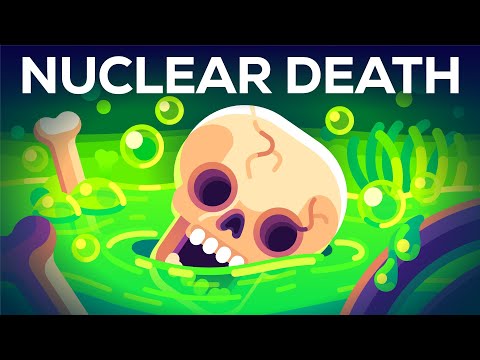
Kurzgesagt takes a look at the number of deaths from nuclear power in comparison with other sources. You might find the actual numbers surprising. https://www.youtube.com/watch?v=Jzfpyo-q-RM Kurzgesagt - in a Nutshell: How Many People Did Nuclear Energy Kill? Nuclear Death Toll I think the video makes an important point. But by focusing exclusively on deaths, it … Continue reading The safety of nuclear power?
Ars Technica’s series on quantum mechanics: How big is a particle?
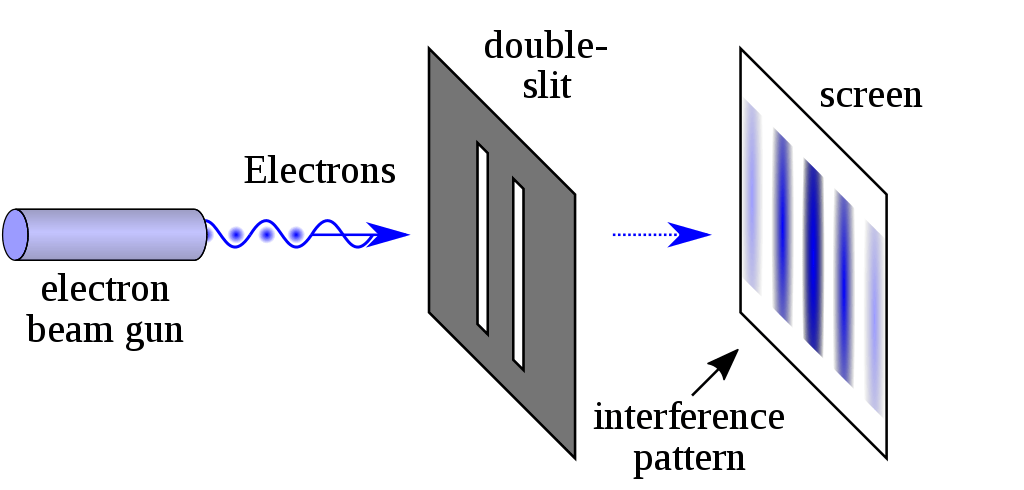
A couple of weeks ago, I shared Ars Technica's first article in a series on quantum mechanics that promised to be math and philosophy free. So far, the author, Miguel Morales, has stuck to that promise. Today he published the third installment. This one focuses on the size of particle, and why that's far from … Continue reading Ars Technica’s series on quantum mechanics: How big is a particle?
The location of the global workspace
(Warning: neuroscience weeds) I've discussed global workspace theories (GWT) before, the idea that consciousness is content making it into a global workspace available to a vast array of specialty processes. More specifically, through a neural competitive process, the content excites key hub areas, which then broadcast it to the rest of the specialty systems throughout … Continue reading The location of the global workspace
Doubting fine tuning
Philip Goff has an article in Scientific American, looking at one popular rational for the multiverse, the anthropic principle, or argument from fine tuning: We exist, and we are living creatures. It follows that the universe we live in must be compatible with the existence of life. However, as scientists have studied the fundamental principles … Continue reading Doubting fine tuning
Ars Technica has a new series on quantum mechanics (no math)
Miguel Morales at Ars Technica is beginning a new introductory guide on quantum mechanics, one he promises won't require any math. If you've watched some of us wrangle over the implications of QM and wondered just what the heck we were so worked up about, this looks like it will be a good series for … Continue reading Ars Technica has a new series on quantum mechanics (no math)