I had to watch this several times before I saw it, so don't be discouraged if you don't the first time. If you're having trouble, it auto-replays at the original TikTok. https://twitter.com/social_brains/status/1518786027288104960 When you do see it, assuming you didn't initially, what were you conscious of before you caught it? Does it make sense to … Continue reading An exercise in detection
From molecule minds to superminds
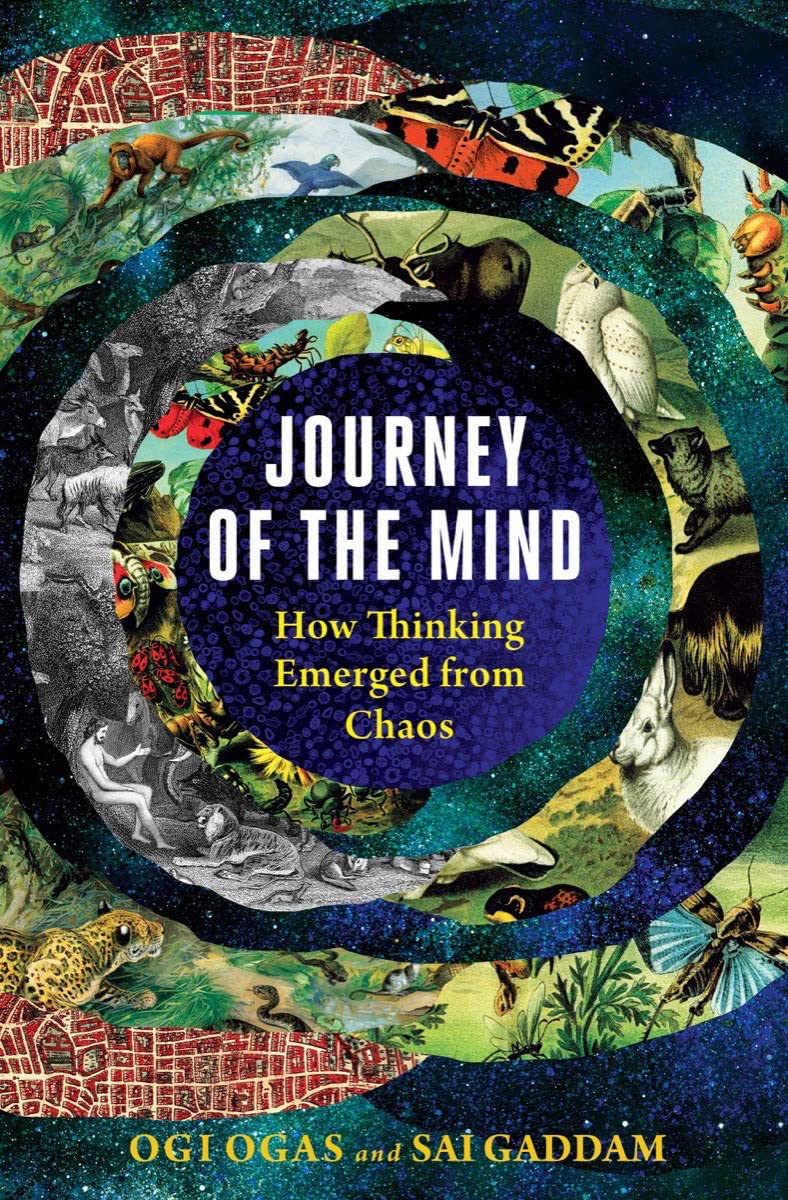
When writing about the mind and consciousness, and how it exists in material systems, many of us resort to functional hierarchies. (Mine typically start with physical interaction and work all the way up to self reflection.) Ogi Ogas and Sai Gaddam have a similar idea, and have written a whole book on it: Journey of … Continue reading From molecule minds to superminds
Avatar: The Last Airbender

Ok, so I'm pretty late to the party on this one. Avatar: The Last Airbender is a world famous animated series. It's American animation, but done in the style of Japanese shonen anime. It's also kid friendly, something that is very evident in the early episodes. For a long time, despite many assurance from friends … Continue reading Avatar: The Last Airbender
How much can we change the causality of the brain and keep consciousness?
James of Seattle clued me in to a thought experiment described by Dr. Anna Schapiro in a Twitter thread. https://twitter.com/AnnaSchapiro/status/1512866137809195011 It's very similar to one discussed in a new preprint paper: Do action potentials cause consciousness? Like all good thought experiments, it exercises and challenges our intuitions. In this case, it forces us to contemplate … Continue reading How much can we change the causality of the brain and keep consciousness?
The benefits of functionalism for animal welfare

Last week, Science News had an article about the difficulty of studying animal emotions, on understanding what an animal in a particular situation is really feeling. It's an interesting article, although not one with much new information for many of you. However, I want to focus on one point raised by one of the researchers … Continue reading The benefits of functionalism for animal welfare
Defining religion polythetically

I've noted before that religion is a tricky thing to define. Simple definitions, such as belief in gods, have a tendency to leave out movements that everyone agrees is religious, such as non-theistic versions of Buddhism. We can be a bit more inclusive by including any belief in a superempirical reality, but that still leaves … Continue reading Defining religion polythetically
Consciousness semanticism

One of the things about consciousness I've tried to call attention to on this blog is the ambiguity of its most common definitions, such as Thomas Nagel's definition of it being "like something" for a particular system. The problem is that when people try to get more specific, they come up with a wide variety … Continue reading Consciousness semanticism
Some history possibly related to Russia’s invasion of Ukraine

I rarely post about contemporary events, particularly ones involving any kind of armed conflict. Too often we don't have a clear view of what's happening, and what we do know comes through the fog of war. Which I definitely think is the case in Russia's invasion of Ukraine. It's often years, sometimes decades, before we … Continue reading Some history possibly related to Russia’s invasion of Ukraine
Decoded: How does a quantum computer work?
This Scientific American video, shared by Aeon, is pretty good if you're looking for a quick basic primer on quantum computing. It's short, less than nine minutes. Although I do have a beef which I'll discuss below. https://www.youtube.com/watch?v=uLnGp1WTNFQ Decoded: How Does a Quantum Computer Work? The beef, which is pretty common with popular explanations of … Continue reading Decoded: How does a quantum computer work?
The function of qualia

Often when I mention that I'm a functionalist in terms of the mind, someone references the Stanford Encyclopedia entry on functionalism. Strange to say, but I've never gone through that entire entry. This week I poked around a little in it, mostly in the objections section. Most of the objections either strike me as more … Continue reading The function of qualia
 SelfAwarePatterns