A question that has come up in a couple of recent conversations: Is there any hope within a scientific or philosophical view of reality for immortality, something like an afterlife that is typically promised in the major religions? The most popular hope these days is the Technological Singularity, the idea that sometime soon we will … Continue reading Scientific and philosophical possibilities for immortality
The promise of quantum computing?
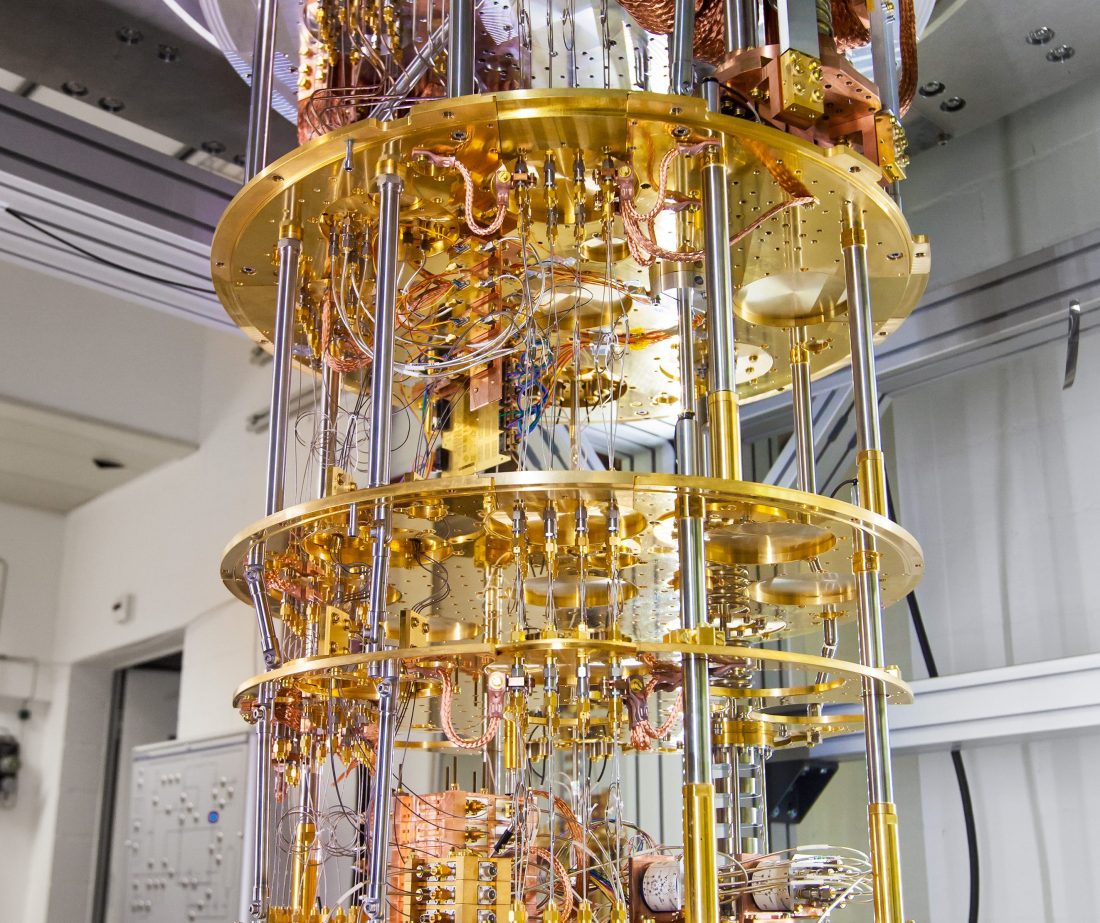
Anyone who follows the computing industry knows that Moore's Law, the observation that computing power doubles every couple of years, has been sputtering in recent years. This isn't unexpected. Gordon Moore himself predicted that eventually the laws of physics would become a constraint. One of the technological hopes for a revival is quantum computing. Quantum … Continue reading The promise of quantum computing?
Our coming automated utopia?

Sean Carroll recently did a podcast interview of futurist John Danaher on the issue of increasing automation, and what it might mean for future society. Danaher sees automation taking away jobs, jobs that won't come back. In this common view, we're heading for a post work society, where the machines do everything, and we need … Continue reading Our coming automated utopia?
The problem with philosophical thought experiments

James Wilson has an article up at Aeon, looking at the trolley problem and other ethical and philosophical thought experiments. One of the things he discusses is the notion that many philosophers have, along with many fans of particular thought experiments, that they're sort of like a scientific experiment. It's not that unusual for someone … Continue reading The problem with philosophical thought experiments
Pain is information, but what is information?

From an evolutionary standpoint, why does pain exist? The first naive answer most people reach for is that pain exists to make us take action to prevent damage. If we touch a hot stove, pain makes us pull our hand back. But that's not right. When we touch a hot surface, nociceptors in our hand … Continue reading Pain is information, but what is information?
The spectrum of science to fantasy

A question long argued in the philosophy of science is the demarcation problem. How to we distinguish science from non-science? Karl Popper famously proposed falsifiability as a criteria. To be science, a theory must make predictions that could turn out to be wrong. It must be falsifiable. Theories that are amorphous or flexible enough to … Continue reading The spectrum of science to fantasy
Maybe we wiped Neanderthals out after all

Or at least, that's the conclusion of a paper which models the population changes and other factors involved. New model to study hominin interactions in time-varying climate environment. Neanderthals experienced rapid population decline due to competitive exclusion. Interbreeding only minor contributor to Neanderthal extinction. Abrupt Climate Change not major cause for demise of Neanderthals. Of … Continue reading Maybe we wiped Neanderthals out after all
The measurement problem, Copenhagen, pilot-wave, and many worlds
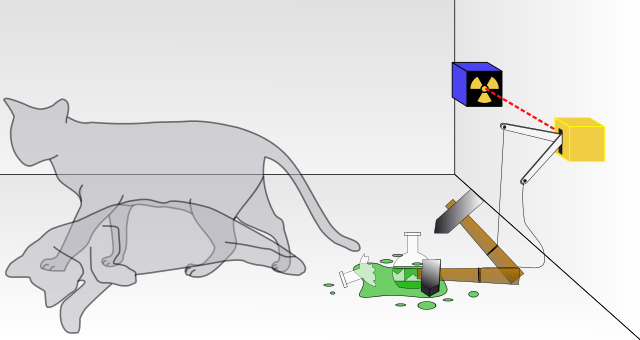
With quantum physics, we have a situation where a quantum object, such as a photon, electron, atom or similar scale entity, acts like a wave, spreading out in a superposition, until we look at it (by measuring it in some manner), then it behaves like a particle. This is known as the measurement problem. Now, … Continue reading The measurement problem, Copenhagen, pilot-wave, and many worlds
Building a consciousness-detector

Joel Frohlich has an interesting article up at Aeon on the possibility of detecting consciousness. He begins with striking neurological case studies, such as the one of a woman born without a cerebellum, yet fully conscious, indicating that the cerebellum is not necessary for consciousness. He works his way to the sobering cases of consciousness … Continue reading Building a consciousness-detector
SMBC: Social Science

Occasionally Saturday Morning Breakfast Cereal captures an important insight, in this case, people's attitudes toward the social sciences. My attitude toward the social sciences is that they are quite capable of being scientific. They're not always, but then even the "hard" sciences have their lapses. On the one hand, what social scientists are studying exists … Continue reading SMBC: Social Science
 SelfAwarePatterns