The semantic indeterminacy of sentience

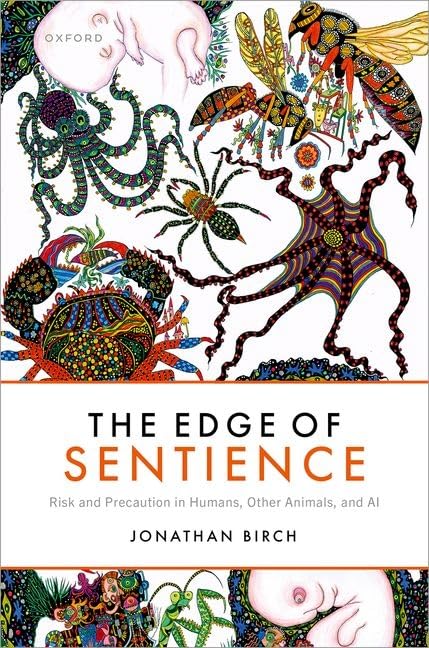
Cover of the book "The Edge Of Sentience" showing a wide variety of animals.

I'm currently reading Jonathan Birch's The Edge of Sentience, a book focusing on the boundary between systems that can feel pleasure or pain, and those that can't, and the related ethics. While this is a subject I'm interested in, I'm leery of the activism the animal portions of it attract. I have nothing in particular … Continue reading The semantic indeterminacy of sentience

The problem with the knowledge argument

A linear representation of the visible light spectrum, with the colors in wavelength order.

What does the knowledge argument actually demonstrate? The argument, which shows up in various forms in numerous philosophical papers and thought experiments, is that we can have a complete physical understanding of a conscious being, but still not know how it feels to be that being. We can know everything about a bat's nervous system, … Continue reading The problem with the knowledge argument

Illusionism and functionalism

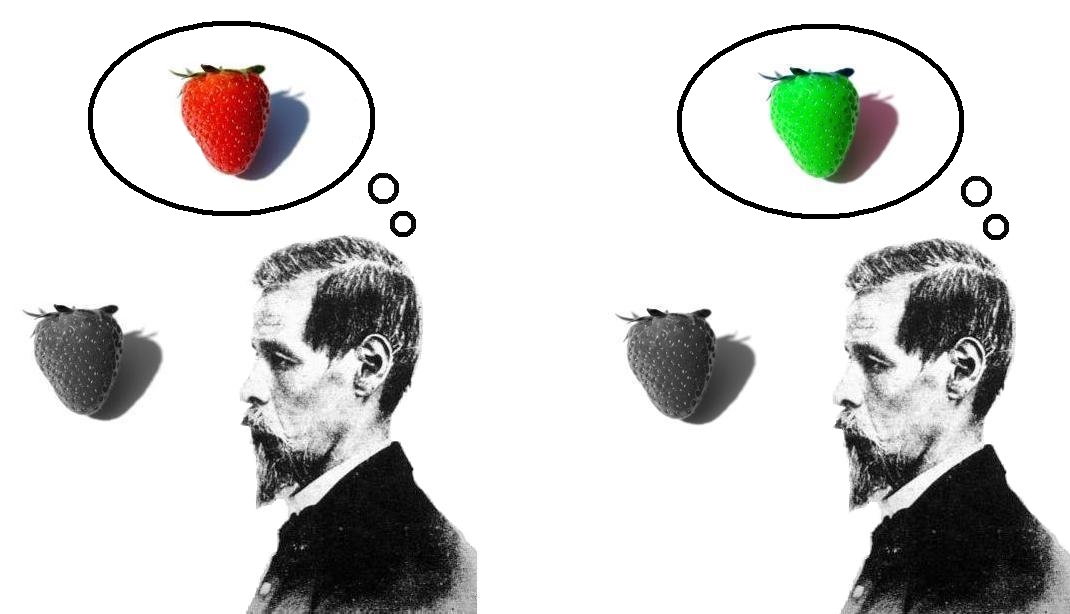
Inverted spectrum: showing one person's perception of a red strawberry equivalent to another's experience of a green one.

In the last thread, someone asked what exactly is it about consciousness that illusionists say is illusory? One quick answer is that for illusionists, the properties people see in experience that incline us to think that consciousness is a metaphysically hard problem, are what's illusory. In weak illusionism, the properties aren't what they seem. In … Continue reading Illusionism and functionalism

Illusionism and types of physicalism

Can we in principle ever deduce the mental from the physical? Christopher Devlin Brown and David Papineau have a new paper out in the Journal of Consciousness Studies titled: Illusionism and A Posteriori Physicalism; No Fact of the Matter. (Note: the link is to a free version.) As the title makes clear, the overall gist … Continue reading Illusionism and types of physicalism

AI intelligence, consciousness, and sentience

Poster for the movie Ex Machina

Can the possibility of AI consciousness be ruled out? Anil Seth has a new preprint on the question of AI consciousness. Seth is skeptical about AI consciousness, although he admits that he can't rule it out completely. He spends some time attacking computational functionalism, the view that mental states are functional in nature, that they … Continue reading AI intelligence, consciousness, and sentience

Consciousness must be adaptive

A cuttlefish

The New York Declaration on Animal Consciousness has been making a lot of headlines. The declaration itself has somewhat careful language in terms of what it's asserting, but many of the headlines don't. The declaration is short, so it's easy to quote in full. Which animals have the capacity for conscious experience? While much uncertainty … Continue reading Consciousness must be adaptive

Some thoughts on Daniel Dennett’s ideas

Philosopher Daniel Dennett

Yesterday Daniel Dennett died. He was 82, about the same age as my father when he died a few years ago. I think I've mentioned before that the first writer I read on consciousness was Susan Blackmore. But I know Dennett wasn't far behind, likely based on Blackmore's positive discussions of his work, but also … Continue reading Some thoughts on Daniel Dennett’s ideas

Is AI consciousness an urgent issue?

Poster for The Creator, showing a soldier with a robot child

AI consciousness seems like an easier thing to ponder when you approach it from a functionalist viewpoint. Sunday I watched the movie The Creator. The premise is a few decades in the future, we've managed to create sentient robots. At first, all seems well, with them being a boon for humanity. Then a nuclear bomb goes off in … Continue reading Is AI consciousness an urgent issue?