Philosopher Peter Hankins at Conscious Entities has a write-up on the November 12 issue of the JCS (Journal of Consciousness Studies) in which philosophers, psychologists, and neuroscientists such as Keith Frankish, Daniel Dennett, Susan Blackmore, and Michael Graziano, debate whether it makes sense to refer to phenomenal consciousness as an illusion. Unfortunately the full text of the … Continue reading The illusion of phenomenal consciousness?
Tag: Consciousness
Daniel Wolpert: The real reason for brains
I came across this old TED talk today and decided to share it because it's relevant to the previous post on consciousness and simulations. Daniel Wolpert's talk doesn't address consciousness specifically, only the overall role of the simulations, but it's still a fascinating exploration of what we're doing when our attention is focused on a … Continue reading Daniel Wolpert: The real reason for brains
Is consciousness a simulation engine, a prediction machine?
Back in September (which now seems like a million years ago), I did a series of posts on consciousness inspired by Todd Feinberg and Jon Mallatt’s recent book, ‘The Ancient Origins of Consciousness: How the Brain Created Experience‘. In that series, I explored consciousness as a system modeling its environment and itself as a guide to … Continue reading Is consciousness a simulation engine, a prediction machine?
The problems with philosophical zombies
In any online conversation about consciousness, sooner or later someone is going to bring up philosophical zombies as an argument for consciousness being non-physical, or at least some portion of it. The Stanford Encyclopedia of Philosophy introduces the p-zombie concept as follows: Zombies in philosophy are imaginary creatures designed to illuminate problems about consciousness and its relation … Continue reading The problems with philosophical zombies
The range of conscious systems and the hard problem
This is the fifth and final post in a series inspired by Todd Feinberg and Jon Mallatt's new book, 'The Ancient Origins of Consciousness: How the Brain Created Experience'. The previous posts were: What counts as consciousness? Predators and the rise of sensory consciousness Types of sensory consciousness The neural mechanics of sensory consciousness In the … Continue reading The range of conscious systems and the hard problem
The neural mechanics of sensory consciousness
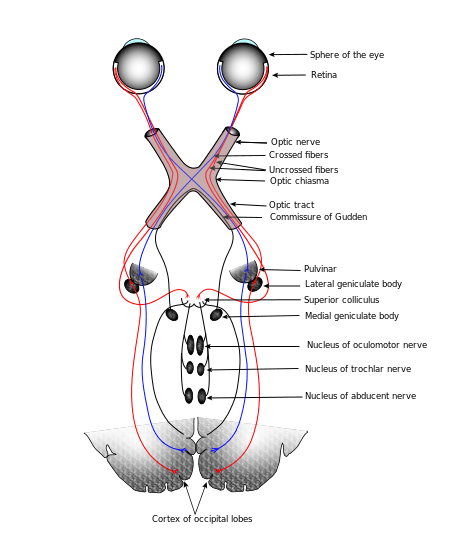
This is the fourth in a series of posts inspired by Todd Feinberg and Jon Mallatt's new book, 'The Ancient Origins of Consciousness: How the Brain Created Experience'. The first three were: What counts as consciousness? Predators and rise of sensory consciousness Types of sensory consciousness So, at this point in the series, we've talked about what … Continue reading The neural mechanics of sensory consciousness
Types of sensory consciousness

This is the third in a series of posts inspired by Todd Feinberg and Jon Mallatt's new book, 'The Ancient Origins of Consciousness: How the Brain Created Experience'. The first two were: What counts as consciousness? Predators and rise of sensory consciousness With this post, we're going to get into the different types of sensory … Continue reading Types of sensory consciousness
Predators and the rise of sensory consciousness
This is the second post in a series inspired by Todd Feinberg and Jon Mallatt's new book, 'The Ancient Origins of Consciousness: How the Brain Created Experience'. The first post in the series was: What counts as consciousness? Life appears to have gotten started fairly early in Earth's history. The oldest known fossils are now … Continue reading Predators and the rise of sensory consciousness
What counts as consciousness?
One of the things I get reminded of every few years, is that difficult determinations often look clearer when you consider them in a wider scope. Years ago, when I was trying to figure out whether conservative or progressive political policies were better, I discovered that widening my investigation to history helped immensely, and widening even further … Continue reading What counts as consciousness?
The challenges of copying a mind
Michael Graziano has an article at the Atlantic looking at the plausibility of mind copying. He doesn't beat around the bush, going all in with the title: Why You Should Believe in the Digital Afterlife, although the actual text of the article is more nuanced, and echoes what I hear from most neuroscientists. As a neuroscientist, … Continue reading The challenges of copying a mind
 SelfAwarePatterns