I noted in the post on Susan Blackmore's views that often consciousness get associated with the results of one of three processes: perception, attention, or introspection. Interestingly, while everyone and their brother has a book out on consciousness, attention receives far less... attention. At least in the popular press. The science of attention has a … Continue reading Attention and consciousness
Tag: Consciousness
SMBC: Let’s ask the aliens to explain consciousness
Today's Saturday Morning Breakfast Cereal comic is pretty good, and related to our recent discussions. Click through for the original to see the hovertext and Red Button bonus caption How would you have responded to Zorkrang's initial question? (Assuming you weren't more concerned about being naked and experimented on by an extraterrestrial.)
Susan Blackmore’s illusionism
Susan Blackmore's Consciousness: A Very Short Introduction may have been the first book I read on consciousness many years ago. Recent conversations rekindled my interest in her views. I'm pretty sure her discussion of consciousness as an illusion was the first time I had encountered that idea. Strong illusionists such as Keith Frankish and Daniel … Continue reading Susan Blackmore’s illusionism
What does it mean to be “like something”?
When it comes to my philosophy of consciousness, I've noted many times that I'm a functionalist, someone who sees mental states, including conscious ones, as being more about what they do, their causal roles and relations, than what they are. Since functionalism focuses on functionality exclusively, it often gets lumped in with illusionism, which typically … Continue reading What does it mean to be “like something”?
Graziano’s non-mystical approach to consciousness
Someone called my attention to a new paper by Michael Graziano: A conceptual framework for consciousness. I've highlighted Graziano's approach and theory many times over the years. I think his Attention Schema Theory provides important insights into how top down attention works. But it's his overall approach that I find the most value in. He's … Continue reading Graziano’s non-mystical approach to consciousness
An exercise in detection
I had to watch this several times before I saw it, so don't be discouraged if you don't the first time. If you're having trouble, it auto-replays at the original TikTok. https://twitter.com/social_brains/status/1518786027288104960 When you do see it, assuming you didn't initially, what were you conscious of before you caught it? Does it make sense to … Continue reading An exercise in detection
From molecule minds to superminds
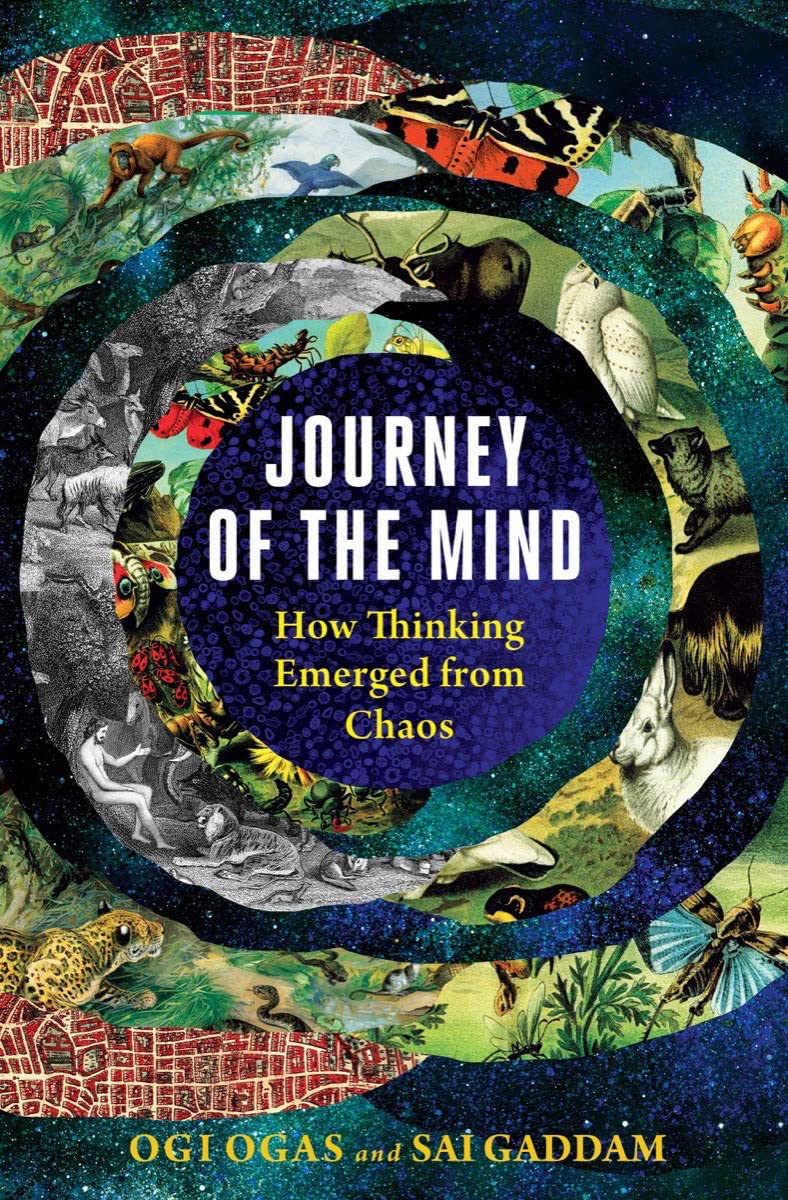
When writing about the mind and consciousness, and how it exists in material systems, many of us resort to functional hierarchies. (Mine typically start with physical interaction and work all the way up to self reflection.) Ogi Ogas and Sai Gaddam have a similar idea, and have written a whole book on it: Journey of … Continue reading From molecule minds to superminds
How much can we change the causality of the brain and keep consciousness?
James of Seattle clued me in to a thought experiment described by Dr. Anna Schapiro in a Twitter thread. https://twitter.com/AnnaSchapiro/status/1512866137809195011 It's very similar to one discussed in a new preprint paper: Do action potentials cause consciousness? Like all good thought experiments, it exercises and challenges our intuitions. In this case, it forces us to contemplate … Continue reading How much can we change the causality of the brain and keep consciousness?
The benefits of functionalism for animal welfare
Last week, Science News had an article about the difficulty of studying animal emotions, on understanding what an animal in a particular situation is really feeling. It's an interesting article, although not one with much new information for many of you. However, I want to focus on one point raised by one of the researchers … Continue reading The benefits of functionalism for animal welfare
Consciousness semanticism
One of the things about consciousness I've tried to call attention to on this blog is the ambiguity of its most common definitions, such as Thomas Nagel's definition of it being "like something" for a particular system. The problem is that when people try to get more specific, they come up with a wide variety … Continue reading Consciousness semanticism