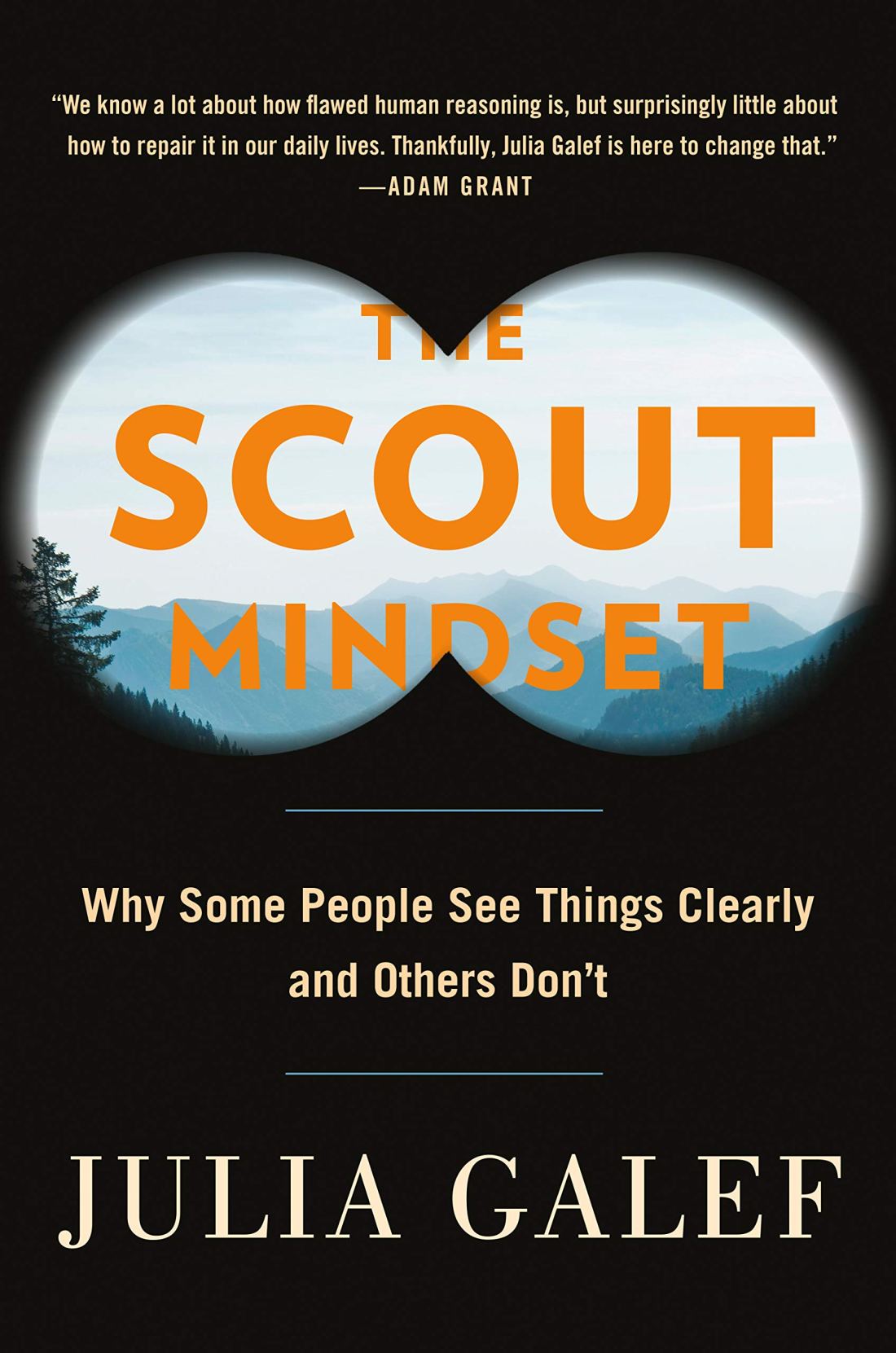
Julia Galef is the host of the podcast Rationally Speaking (which I've listened to for years and recommend). She's a rationalist concerned with improving the way she and others think. As a result, she often puts out material critiquing typical reasoning mistakes. As Sean Carroll pointed out recently when interviewing her, this tends to put … Continue reading The Scout Mindset
Tag: Epistemology
Scientific theories and prescriptive vs descriptive instrumentalism
Those of you who've known me a while may remember that I dislike accepting philosophical labels. For example, although the labels "materialist" or "physicalist" are more or less accurate descriptions of what I think, they often seem to imply an ideological rigidity I'm not comfortable with. My attitude toward these labels somewhat resonates with Neil … Continue reading Scientific theories and prescriptive vs descriptive instrumentalism
Darwin’s letter to a critic
Julia Galef has been a bit quiet lately. Her YouTube channel has been dark for along time, and even her podcast, Rationally Speaking, has slowed down for a while, so it's good to see this from her. In it, she discusses a letter from Charles Darwin to one of his critics, one that actually thanked … Continue reading Darwin’s letter to a critic
Talking across the boundary of the epiphany
When learning a new idea or concept, often it doesn't make a lot of sense at first. The various descriptions may seem dubious, and we might fail to see the structural similarities that bind them. Then, at some point, if we keep at it and are lucky, we "get it", it "clicks", we have an … Continue reading Talking across the boundary of the epiphany
Fostering an open mind
There's an interesting article in Psyche: How to foster ‘shoshin’. "Shoshin" is a Japanese Zen word referring to a "beginner's mind." The idea is that when we take ourselves to be a beginner in a subject, or at least still a student of it, we're more open to possibilities. But as we begin to think … Continue reading Fostering an open mind
The relationship between usefulness and falsifiability
There's an article by Matthew R. Francis in Symmetry magazine garnering a lot of attention asking whether falsifiability is a useful criteria for scientific theories. Popper wrote in his classic book The Logic of Scientific Discovery that a theory that cannot be proven false—that is, a theory flexible enough to encompass every possible experimental outcome—is scientifically useless. … Continue reading The relationship between usefulness and falsifiability
Is cosmic inflation settled science?
Ethan Siegel at Starts With a Bang has a post up arguing that the multiverse must exist. His reasoning has to do with cosmic inflation. Inflation is the theory that the universe expanded at an exponential rate in the first billionth of a trillionth of a trillionth of a second of the big bang timeline. … Continue reading Is cosmic inflation settled science?
Probability is relative
At Aeon, Nevin Climenhaga makes some interesting points about probability. After describing different interpretations of probability, one involving the frequency with which an event will occur, another involving its propensity to occur, and a third involving our confidence it will occur, he describes how, given a set of identical facts, each of these interpretations can … Continue reading Probability is relative
Why are we real?
Nathaniel Stein has an interesting article at Aeon, The why of reality: The easy question came first, a few months after my son turned four: ‘Are we real?’ It was abrupt, but not quite out of nowhere, and I was able to answer quickly. Yes, we’re real – but Elsa and Anna, two characters from Frozen, … Continue reading Why are we real?
Strong vs weak emergence
The Neuroskeptic has an interesting post on a paper challenging theories of mind based on strong emergence. A new paper offers a broad challenge to a certain kind of ‘grand theory’ about the brain. According to the authors, Federico E. Turkheimer and colleagues, it is problematic to build models of brain function that rely on ‘strong … Continue reading Strong vs weak emergence