Does reality require observers?

Amanda Gefter has an article at Nautilus a couple of you have asked me about: Reality Exists Without Observers? Boooo! The title is an accurate summary of her thesis. Gefter is responding to a book by Vlatko Vedral, where he reportedly argues for a reality that doesn't require observers. In terms of quantum mechanics, Vedral … Continue reading Does reality require observers?

Is quantum immortality a real thing?

In discussions about the Everett interpretation of quantum mechanics, one of the concerns I often see expressed is for the perverse low probability outcomes that would exist in the quantum multiverse. For example, if every quantum outcome is reality, then in some branches of the wave function, entropy has never increased. In some branches, quantum … Continue reading Is quantum immortality a real thing?

Many-worlds without necessarily many worlds?

IAI has a brief interview of David Deutsch on his advocacy for the many-worlds interpretation of quantum mechanics. (Warning: possible paywall.) Deutsch has a history of showing little patience with other interpretations, and this interview is no different. A lot of the discussion centers around his advocacy for scientific realism, the idea that science is … Continue reading Many-worlds without necessarily many worlds?

Testing Everettian quantum mechanics

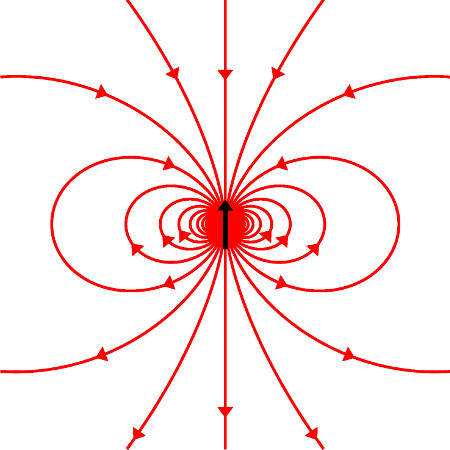
Neutron spin and associated magnetic dipole field lines.

The Everett theory of quantum mechanics is testable in ways most people don't realize. Before getting into how or why, I think it's important to deal with a long standing issue. Everettian theory is more commonly known as the "many worlds interpretation", a name I use myself all the time. But what's often lost in the discussion … Continue reading Testing Everettian quantum mechanics

Many-worlds, probabilities, and world stacks

In this video, Matt O'Dowd tackles the issue of probabilities in the many-worlds interpretation of quantum mechanics. A quick reminder. The central mystery of quantum mechanics is that quantum particles move like waves of possible outcomes that interfere with each other, until a measurement happens, when they appear to collapse to one localized outcome, the … Continue reading Many-worlds, probabilities, and world stacks

Many-worlds and Bell’s theorem

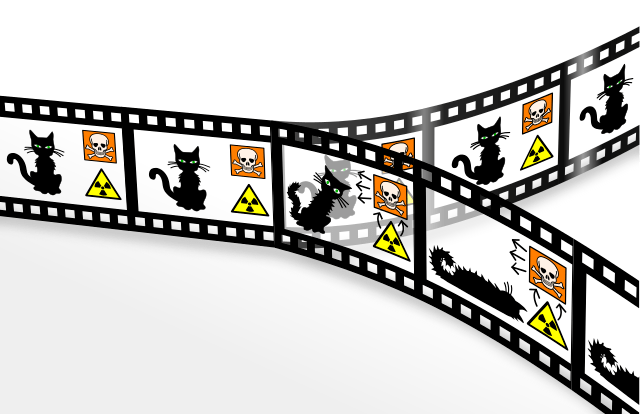
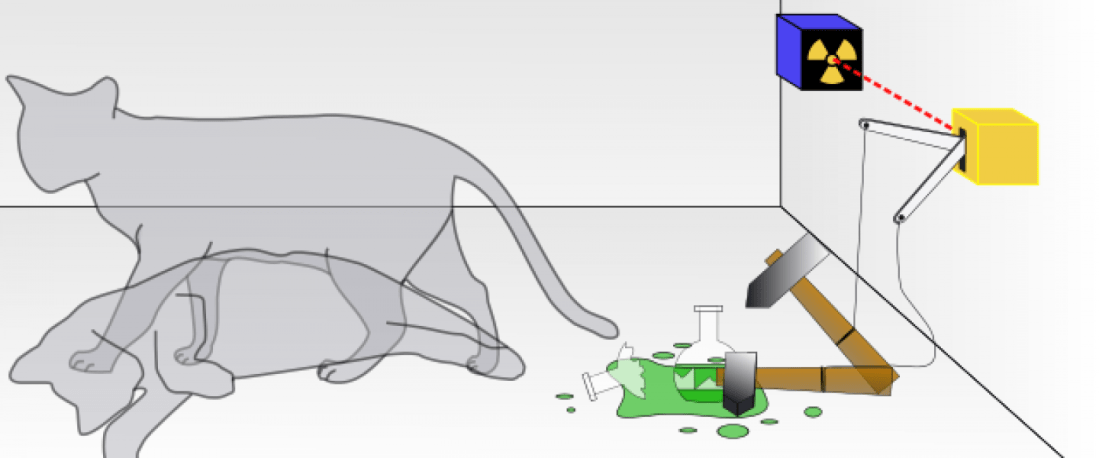
Schrodinger's cat in many worlds

Sean Carroll's February AMA episode is up on his podcast. As usual, there were questions about the Everett many-worlds interpretation of quantum mechanics (which I did a new primer on a few weeks ago). This time, there was a question related to the correlated outcomes in measurements of entangled particles that are separated by vast … Continue reading Many-worlds and Bell’s theorem

The entanglements and many worlds of Schrödinger’s cat

I recently had a conversation with someone, spurred by the last post, that led to yet another description of the Everett many-worlds interpretation of quantum mechanics, which I think is worth putting in a post. It approaches the interpretation from a different angle than I've used before. As mentioned last time, the central mystery of … Continue reading The entanglements and many worlds of Schrödinger’s cat

The nature of splitting worlds in the Everett interpretation

Schrodinger's cat in many worlds

This post is about an aspect of the Everett many-worlds interpretation of quantum mechanics. I've given brief primers of the interpretation in earlier posts (see here or here), in case you need one. Sean Carroll, as he does periodically, did an AMA on his podcast. He got a number of questions on the Everett interpretation, … Continue reading The nature of splitting worlds in the Everett interpretation