What physicists believe about quantum mechanics

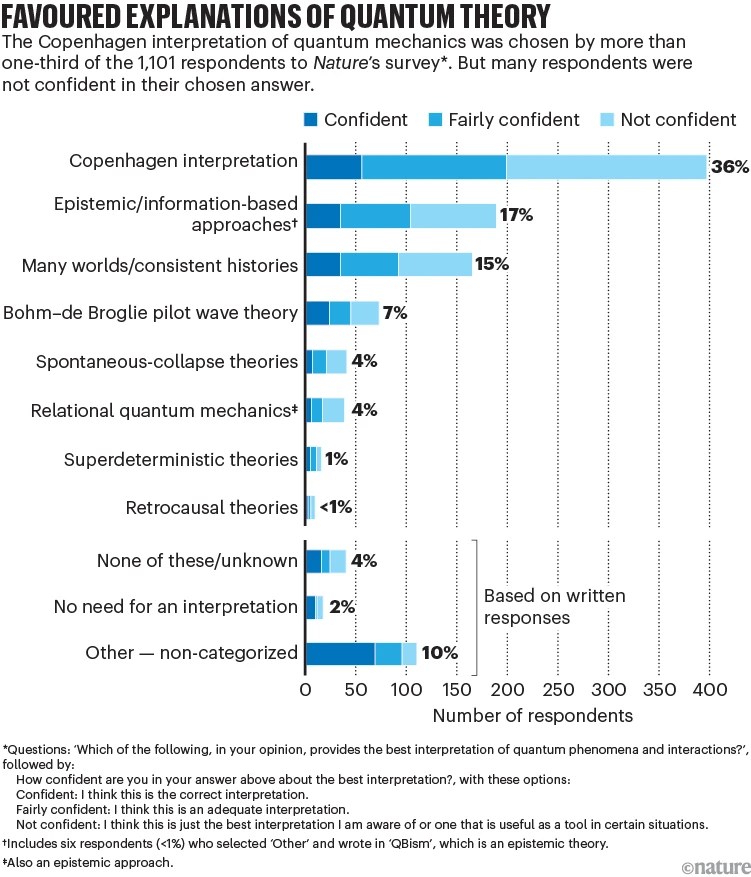
A few years ago David Bourget and David Chalmers did a follow up survey to the 2009 one polling philosophers on what they believe about various questions. One of them was quantum mechanics, particularly the measurement problem and its various interpretations. Over the decades there have been surveys of physicists themselves on this question, but … Continue reading What physicists believe about quantum mechanics

Many-worlds without necessarily many worlds?

IAI has a brief interview of David Deutsch on his advocacy for the many-worlds interpretation of quantum mechanics. (Warning: possible paywall.) Deutsch has a history of showing little patience with other interpretations, and this interview is no different. A lot of the discussion centers around his advocacy for scientific realism, the idea that science is … Continue reading Many-worlds without necessarily many worlds?

Avoiding the structural gaps

A long standing debate in quantum physics is whether the wave function is real. A quick reminder: quantum entities appear to move like waves, including portions interfering with each other. These waves are modeled with the wave function. But once measured, quantum objects manifest as localized points or field excitations. The wave function can't predict … Continue reading Avoiding the structural gaps

Why I’m an ontic structural realist

Scientific realism vs instrumentalism A long standing debate in the philosophy of science is about what our best scientific theories tell us. Some argue that they reveal true reality, that is, they are real. Others that scientific theories are only useful prediction frameworks, instruments useful in the creation of technology, but that taking any further … Continue reading Why I’m an ontic structural realist

Existential Comics: the philosophy of magic

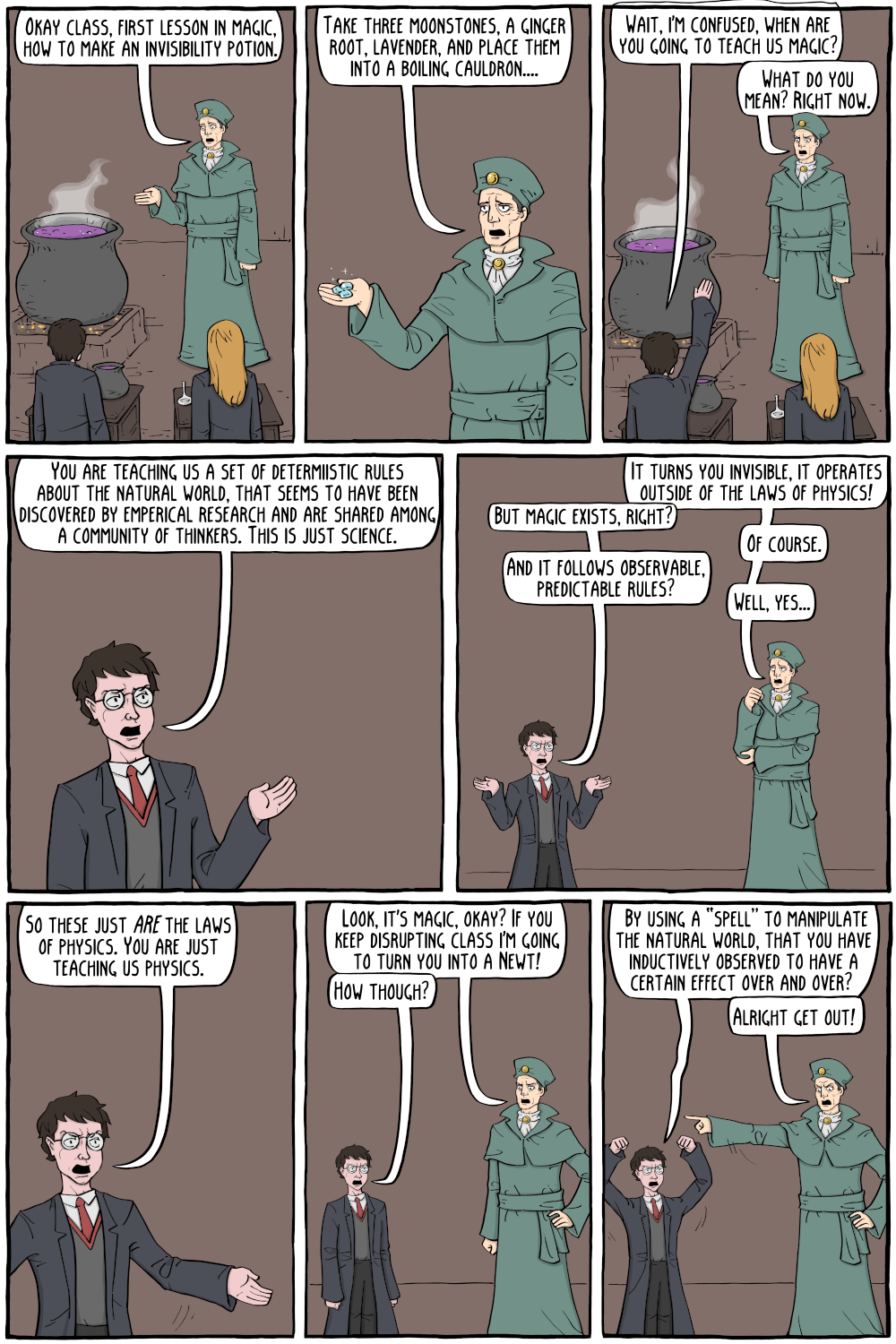
What is the difference between magic and science? It's been a while since I shared an Existential Comic. This one gets at a question we've discussed before, although it's been several years. What exactly is the distinction between the physical and non-physical, in this case between science and magic? Credit: https://existentialcomics.com/comic/537 Corey Mohler, the author, has a … Continue reading Existential Comics: the philosophy of magic

Testing Everettian quantum mechanics

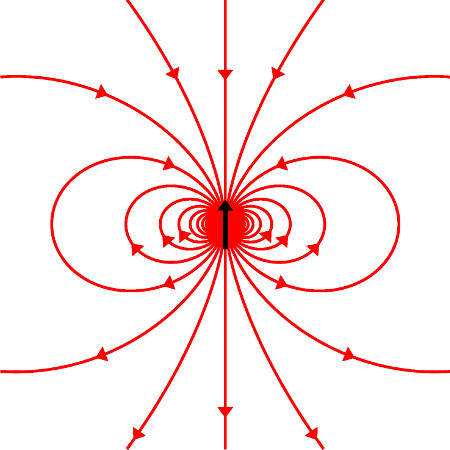
Neutron spin and associated magnetic dipole field lines.

The Everett theory of quantum mechanics is testable in ways most people don't realize. Before getting into how or why, I think it's important to deal with a long standing issue. Everettian theory is more commonly known as the "many worlds interpretation", a name I use myself all the time. But what's often lost in the discussion … Continue reading Testing Everettian quantum mechanics

Those inconvenient quantum interference patterns

Are quantum states and the overall wave function real? Or merely a useful prediction tool? The mystery of quantum mechanics is that quantum objects, like electrons and photons, seem to move like waves, until they're measured, then appear as localized particles. This is known as the measurement problem. The wave function is a mathematical tool for modeling, … Continue reading Those inconvenient quantum interference patterns

Is it just the math?

Black hole - Messier 87, a dark center surrounded by the light of an accretion disk

Scientific breakthroughs often begin with someone saying, "Don't panic. This crazy sounding assumption is just to make the math work." Nicholaus Copernicus, when he developed his theory of heliocentrism (the earth orbits the sun), was operating from a scientific realist view. In other words, he thought his system reflected actual reality, or at least reflected it … Continue reading Is it just the math?

What would randomness in general relativity mean?

A new approach for reconciling general relativity and quantum mechanics proposes adding some randomness in general relativity, making it less deterministic on small scales. For several decades, physicists have been trying to reconcile general relativity and quantum mechanics. These theories, despite each having been empirically validated to several decimal places, contradict each other. The problem … Continue reading What would randomness in general relativity mean?