The other day I did a post on structural realism. If you found that interesting, you might find this interview of James Ladyman by Sean Carroll worth listening to (or reading, since there's a transcript). Ladyman is the author of the SEP article on structural realism I linked to, and seems to be a major … Continue reading Interviews of James Ladyman on metaphysics
Tag: Philosophy of science
The relativity of scientism
Philosopher Jonny Thompson has an article up on RealClearScience profiling the views of Mary Midgley: The Three Myths of Scientism. (Warning: the RealClearScience site is pretty ad intensive.) Midgley was a famous critic of views she regarded as scientism, and often sparred with atheist and antitheist Richard Dawkins. As someone who usually takes the scientific … Continue reading The relativity of scientism
Structural realism, a way to be a scientific realist?
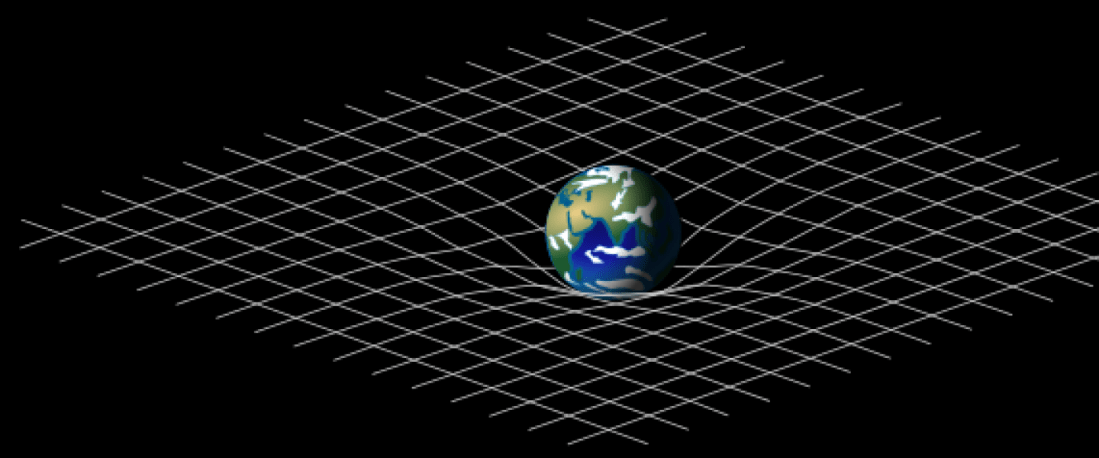
In the scientific realism vs instrumentalism debate, realism is the position that the elements of a scientific theory represent reality. So when general relativity talks about space warping, space really is warping. Instrumentalism, or anti-realism, is the stance that scientific theories are just prediction mechanisms, with no guarantee that they represent reality. Under instrumentalism, general … Continue reading Structural realism, a way to be a scientific realist?
The causal criteria for being real
Ethan Siegel addresses a question on whether spacetime is real. But there’s more to the Universe than the objects within it. There’s also the fabric of spacetime, which has its own set of rules that it plays by: General Relativity. The fabric of spacetime is curved by the presence of matter and energy, and curved … Continue reading The causal criteria for being real
Scientific theories and prescriptive vs descriptive instrumentalism
Those of you who've known me a while may remember that I dislike accepting philosophical labels. For example, although the labels "materialist" or "physicalist" are more or less accurate descriptions of what I think, they often seem to imply an ideological rigidity I'm not comfortable with. My attitude toward these labels somewhat resonates with Neil … Continue reading Scientific theories and prescriptive vs descriptive instrumentalism
Agency, consciousness, and purpose
Philip Ball has an article up at Aeon: Life with purpose, which resonates in theme with the one a few weeks ago by Michael Levin and Dan Dennett on purpose in nature. Like Levin and Dennett, Ball argues that we shouldn't be shy about discussing purpose in biology, or feel obliged to put quotes around … Continue reading Agency, consciousness, and purpose
The iron rule of science?
I'm always interested in new takes on the demarcation between science and non-science, so after seeing the New Yorker write up on Michael Strevens' new book, The Knowledge Machine: How Irrationality Created Modern Science, it seemed like something I needed to read. Strevens begins by examining the two leading theories of science: Karl Popper's falsifiability … Continue reading The iron rule of science?
The beginnings of purpose
Michael Levin and Daniel Dennett have an interesting article up at Aeon, on the right way to talk about purpose and cognition in biology, particularly in simple organisms and lower level mechanisms. The core thesis is that an organism, at any level, all the way down to a single cell, is an agent, with its … Continue reading The beginnings of purpose
Fostering an open mind
There's an interesting article in Psyche: How to foster ‘shoshin’. "Shoshin" is a Japanese Zen word referring to a "beginner's mind." The idea is that when we take ourselves to be a beginner in a subject, or at least still a student of it, we're more open to possibilities. But as we begin to think … Continue reading Fostering an open mind
The substitution argument
A preprint came up a few times in my feeds, titled: Falsification and consciousness. The paper argues that all the major scientific theories of consciousness are either already falsified or unfalsifiable. One neuroscientist, Ryota Kanai, calls it a mathematical proof of the hard problem. Based on that description, it was hard to resist looking at … Continue reading The substitution argument