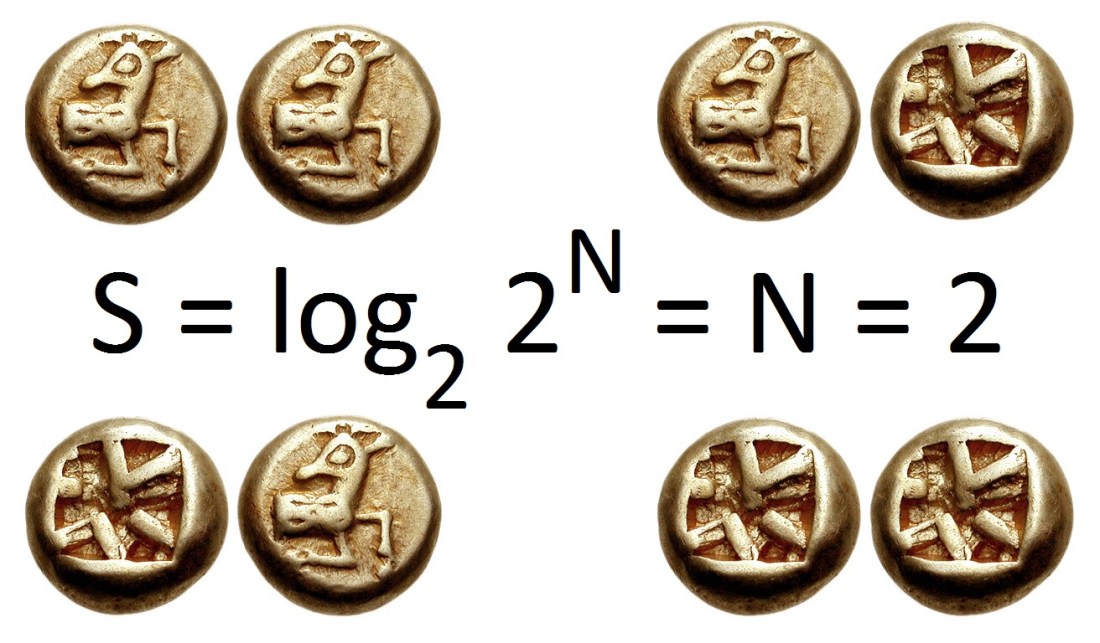
What is the relationship between information, causation, and entropy? The other day, I was reading a post from Corey S. Powell on how we are all ripples of information. I found it interesting because it resonated with my own understanding of information (i.e. it flattered my biases). We both seem to see information as something … Continue reading Entropy transformers
Tag: Philosophy
The scope of free will
Maybe the free will debate is really about the scope of causal influences on our decisions. With Daniel Dennett's death, a lot of podcasters have been replaying his interviews, many of which concern his stance as a free will compatibilist. That and a recent Mind Chat episode focused on Kevin Mitchell's strong emergence understanding of … Continue reading The scope of free will
Consciousness must be adaptive
The New York Declaration on Animal Consciousness has been making a lot of headlines. The declaration itself has somewhat careful language in terms of what it's asserting, but many of the headlines don't. The declaration is short, so it's easy to quote in full. Which animals have the capacity for conscious experience? While much uncertainty … Continue reading Consciousness must be adaptive
Some thoughts on Daniel Dennett’s ideas
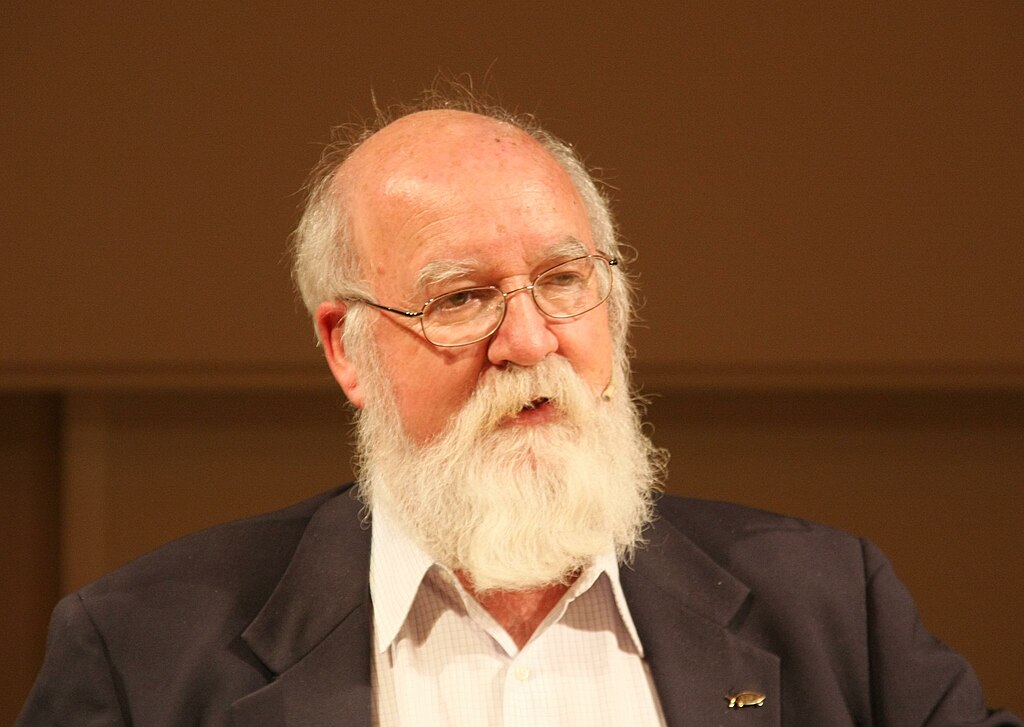
Yesterday Daniel Dennett died. He was 82, about the same age as my father when he died a few years ago. I think I've mentioned before that the first writer I read on consciousness was Susan Blackmore. But I know Dennett wasn't far behind, likely based on Blackmore's positive discussions of his work, but also … Continue reading Some thoughts on Daniel Dennett’s ideas
Existential Comics: the philosophy of magic
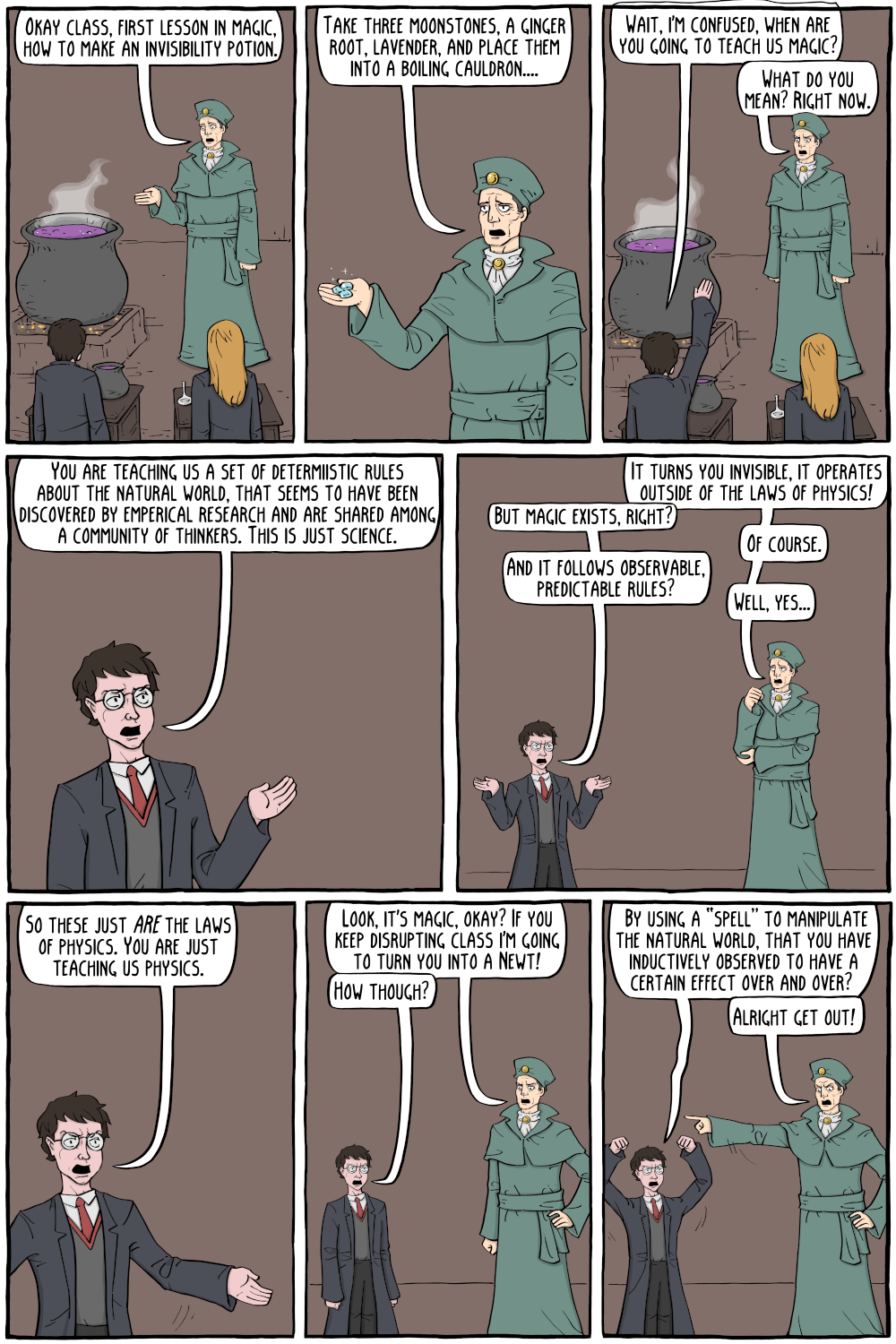
What is the difference between magic and science? It's been a while since I shared an Existential Comic. This one gets at a question we've discussed before, although it's been several years. What exactly is the distinction between the physical and non-physical, in this case between science and magic? Credit: https://existentialcomics.com/comic/537 Corey Mohler, the author, has a … Continue reading Existential Comics: the philosophy of magic
Reasons and conclusions
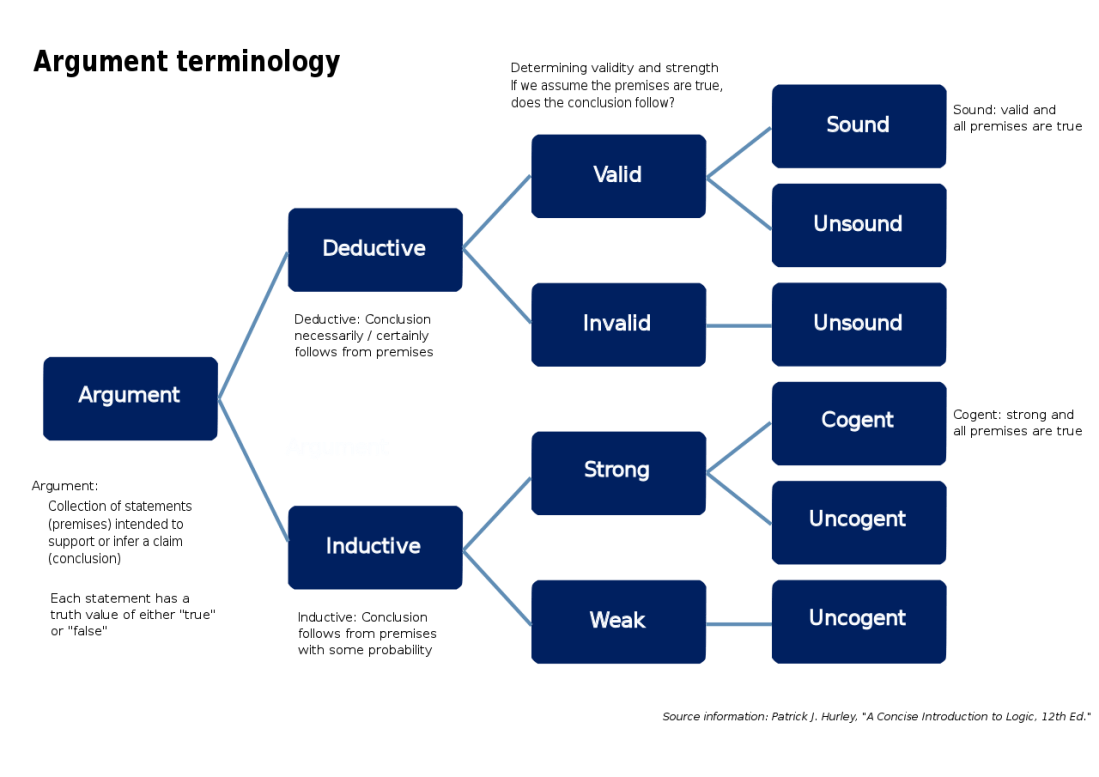
I think the reasons someone reaches a conclusion are at least as important as the conclusion itself. Recently someone I know changed their mind about a topic. Where they had previously disagreed with me on something, they now agree. Which was great, except, I found their reasons for the change problematic. It reminded me that I often have … Continue reading Reasons and conclusions
Causal completeness
It seems like theories that are causally complete are better than ones with gaps. In thinking about this, I'm reminded of a Psyche article I shared a few years ago on fostering an open mind. One of their pieces of advice resonates with an outlook I've had for some time. If embarking on a full-on explanation … Continue reading Causal completeness
Testing Everettian quantum mechanics
The Everett theory of quantum mechanics is testable in ways most people don't realize. Before getting into how or why, I think it's important to deal with a long standing issue. Everettian theory is more commonly known as the "many worlds interpretation", a name I use myself all the time. But what's often lost in the discussion … Continue reading Testing Everettian quantum mechanics
Those inconvenient quantum interference patterns
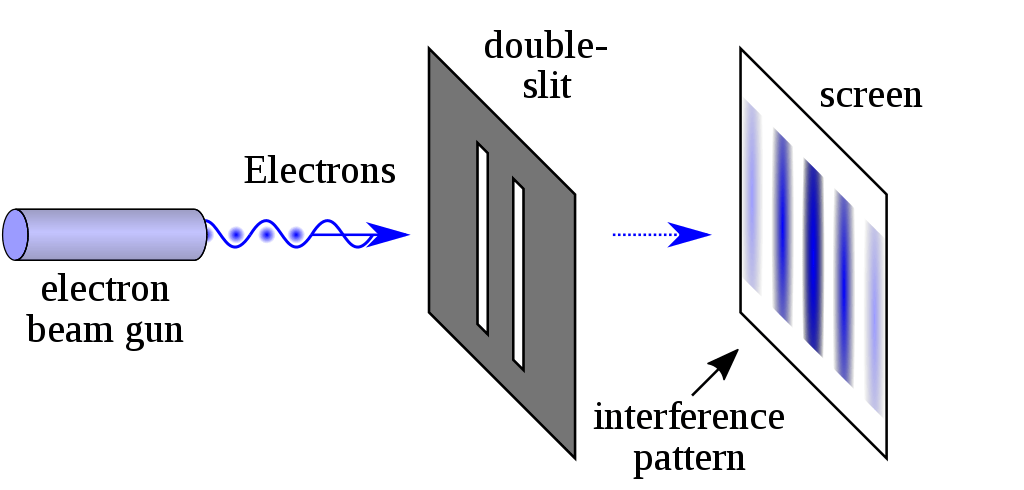
Are quantum states and the overall wave function real? Or merely a useful prediction tool? The mystery of quantum mechanics is that quantum objects, like electrons and photons, seem to move like waves, until they're measured, then appear as localized particles. This is known as the measurement problem. The wave function is a mathematical tool for modeling, … Continue reading Those inconvenient quantum interference patterns
Is it just the math?
Scientific breakthroughs often begin with someone saying, "Don't panic. This crazy sounding assumption is just to make the math work." Nicholaus Copernicus, when he developed his theory of heliocentrism (the earth orbits the sun), was operating from a scientific realist view. In other words, he thought his system reflected actual reality, or at least reflected it … Continue reading Is it just the math?