Gregg Caruso and Daniel Dennett have a new book out: Just Deserts: Debating Free Will. Michael Shermer, in a recent podcast, hosted both of them in a debate, which I just finished listening to. Ed Gibney, on his blog, also links to a review he wrote on the book, as well as posting additional thoughts … Continue reading Free will and social responsibility
Tag: Philosophy
Structural realism, a way to be a scientific realist?
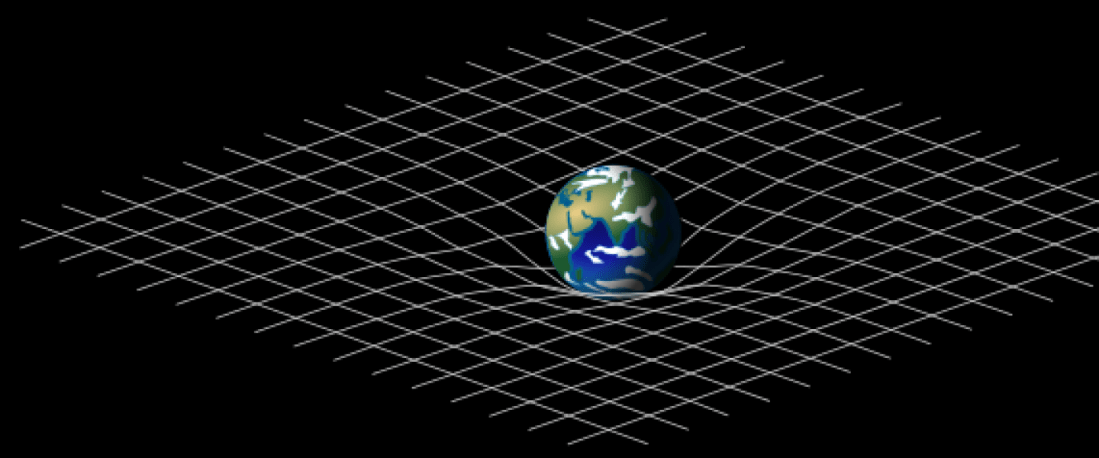
In the scientific realism vs instrumentalism debate, realism is the position that the elements of a scientific theory represent reality. So when general relativity talks about space warping, space really is warping. Instrumentalism, or anti-realism, is the stance that scientific theories are just prediction mechanisms, with no guarantee that they represent reality. Under instrumentalism, general … Continue reading Structural realism, a way to be a scientific realist?
The causal criteria for being real
Ethan Siegel addresses a question on whether spacetime is real. But there’s more to the Universe than the objects within it. There’s also the fabric of spacetime, which has its own set of rules that it plays by: General Relativity. The fabric of spacetime is curved by the presence of matter and energy, and curved … Continue reading The causal criteria for being real
The right reason to doubt the simulation hypothesis
This weekend, Sabine Hossenfelder did a video and post about the simulation hypothesis, the idea that we might be living in a computer simulation. She dismisses the notion that consciousness can't be a computational simulation, which I think is correct, but then settles on the idea that physics itself can't be simulated, because we have … Continue reading The right reason to doubt the simulation hypothesis
Darwin’s letter to a critic
Julia Galef has been a bit quiet lately. Her YouTube channel has been dark for along time, and even her podcast, Rationally Speaking, has slowed down for a while, so it's good to see this from her. In it, she discusses a letter from Charles Darwin to one of his critics, one that actually thanked … Continue reading Darwin’s letter to a critic
Talking across the boundary of the epiphany
When learning a new idea or concept, often it doesn't make a lot of sense at first. The various descriptions may seem dubious, and we might fail to see the structural similarities that bind them. Then, at some point, if we keep at it and are lucky, we "get it", it "clicks", we have an … Continue reading Talking across the boundary of the epiphany
The problem with the theater of the mind metaphor
In the last post, in response to my criticism of Chalmers for relying on the standard but vague "something it is like" definition of phenomenal consciousness, someone pointed out that Chalmers has talked before metaphorically about a movie playing in our head, notably at the beginning of his TED talk on consciousness. I think this … Continue reading The problem with the theater of the mind metaphor
Consciousness and moral status
This talk by David Chalmers on the relationship between consciousness and moral status is pretty interesting. You don't have to watch the video to follow this post, but it's in response to arguments he makes in the talk. The video is 75 minutes but the talk only lasts about 50 minutes with a Q&A afterward. … Continue reading Consciousness and moral status
The block universe is interesting, but not comforting
Click through for source and bonus red button caption at smbc-comics.com. This SMBC gets at something that's often bothered me about the way many people talk about the block universe concept. The block universe is the idea that if the universe is fully deterministic, then its entire history from beginning to end exists in an … Continue reading The block universe is interesting, but not comforting
The iron rule of science?
I'm always interested in new takes on the demarcation between science and non-science, so after seeing the New Yorker write up on Michael Strevens' new book, The Knowledge Machine: How Irrationality Created Modern Science, it seemed like something I needed to read. Strevens begins by examining the two leading theories of science: Karl Popper's falsifiability … Continue reading The iron rule of science?