Many-worlds without necessarily many worlds?

IAI has a brief interview of David Deutsch on his advocacy for the many-worlds interpretation of quantum mechanics. (Warning: possible paywall.) Deutsch has a history of showing little patience with other interpretations, and this interview is no different. A lot of the discussion centers around his advocacy for scientific realism, the idea that science is … Continue reading Many-worlds without necessarily many worlds?
Are many-worlds and pilot-wave the same theory?

It's been a while, but I've occasionally mentioned on the blog that Cecil B. Demille's The Ten Commandments (the 1950s color version) is one of my favorite movies. And this has remained true even as I've come to see it as straight fantasy. An interesting fact from when I first saw it as a very … Continue reading Are many-worlds and pilot-wave the same theory?

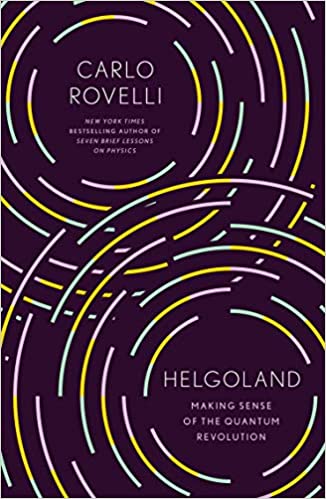
Carlo Rovelli’s Helgoland

I've posted a lot over the years on interpretations of quantum mechanics. My writing has tended to focus on comparing the big three: Copenhagen, pilot-wave, and many-worlds. But there are a lot of others. One that has been gaining converts among physicists and others is Carlo Rovelli's relational quantum mechanics (RQM) interpretation. This is an … Continue reading Carlo Rovelli’s Helgoland

The nature of splitting worlds in the Everett interpretation

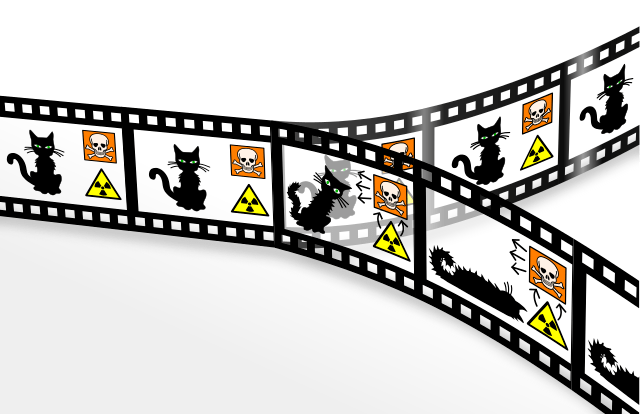
Schrodinger's cat in many worlds

This post is about an aspect of the Everett many-worlds interpretation of quantum mechanics. I've given brief primers of the interpretation in earlier posts (see here or here), in case you need one. Sean Carroll, as he does periodically, did an AMA on his podcast. He got a number of questions on the Everett interpretation, … Continue reading The nature of splitting worlds in the Everett interpretation

Ars Technica’s series on quantum mechanics: How big is a particle?

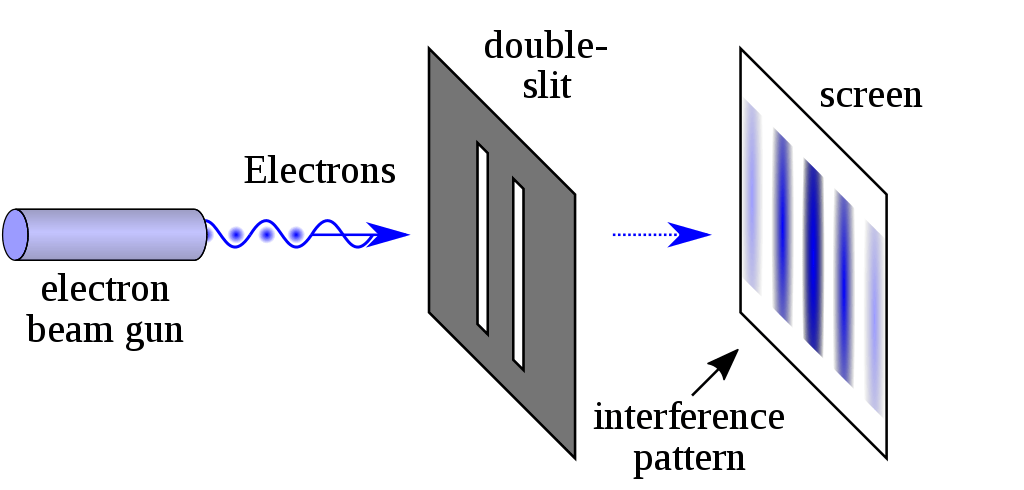
A couple of weeks ago, I shared Ars Technica's first article in a series on quantum mechanics that promised to be math and philosophy free. So far, the author, Miguel Morales, has stuck to that promise. Today he published the third installment. This one focuses on the size of particle, and why that's far from … Continue reading Ars Technica’s series on quantum mechanics: How big is a particle?

Mea culpa on quantum decoherence

Lately, I've been trying to gain a better understanding of quantum decoherence. This is the process of a quantum system in superposition interacting with the environment and, as a result, appearing to lose its quantum nature, notably by having interference between the elements of its superposition become undetectable. Decoherence is often used synonymously with the … Continue reading Mea culpa on quantum decoherence

Thoughts about quantum computing and the wave function

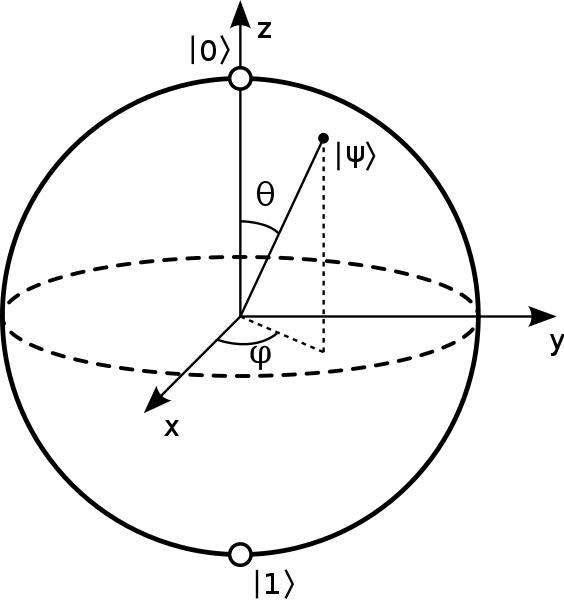
Qubit bloch sphere

The main difference between a quantum computer and a classical one is the qubit. Qubits are like classical bits, in that they hold binary values of either 1 or 0, on or off, true or false, etc. However, qubits, being quantum objects, can be in a superposition of both states at once. The physical manifestation … Continue reading Thoughts about quantum computing and the wave function

David Deutsch’s version of many worlds

Schrodinger's cat in many worlds

Note: I answer the questions asked here in a later post. I've written about the bizarre nature of quantum physics many times, providing a lightning primer back in May on three major interpretations: Copenhagen, pilot-wave, and many worlds.  The many worlds interpretation (MWI) is often summarily dismissed by people, often along with visceral shudders or … Continue reading David Deutsch’s version of many worlds