In last week's post on entropy and information, I started off complaining about the most common definition of entropy as disorder or disorganization. One of the nice things about blogging is you often learn something in the subsequent discussion. My chief complaint about the disorder definition was that it's value-laden. I asked: disordered according to … Continue reading Reconciling the disorder definition of entropy
Tag: Science
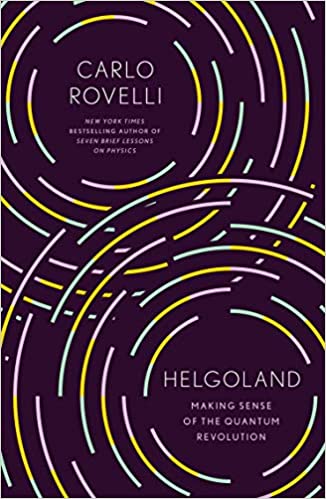
Carlo Rovelli’s Helgoland
I've posted a lot over the years on interpretations of quantum mechanics. My writing has tended to focus on comparing the big three: Copenhagen, pilot-wave, and many-worlds. But there are a lot of others. One that has been gaining converts among physicists and others is Carlo Rovelli's relational quantum mechanics (RQM) interpretation. This is an … Continue reading Carlo Rovelli’s Helgoland
The relativity of scientism
Philosopher Jonny Thompson has an article up on RealClearScience profiling the views of Mary Midgley: The Three Myths of Scientism. (Warning: the RealClearScience site is pretty ad intensive.) Midgley was a famous critic of views she regarded as scientism, and often sparred with atheist and antitheist Richard Dawkins. As someone who usually takes the scientific … Continue reading The relativity of scientism
Structural realism, a way to be a scientific realist?
In the scientific realism vs instrumentalism debate, realism is the position that the elements of a scientific theory represent reality. So when general relativity talks about space warping, space really is warping. Instrumentalism, or anti-realism, is the stance that scientific theories are just prediction mechanisms, with no guarantee that they represent reality. Under instrumentalism, general … Continue reading Structural realism, a way to be a scientific realist?
The marshmallow test and conscious feeling
The recent news reports that cuttlefish are able to pass the marshmallow test are interesting. The classic marshmallow test involved giving a young child a marshmallow but promising them a second one if they could hold off eating the first for 15 minutes. The kid was then left alone in a room with the first … Continue reading The marshmallow test and conscious feeling
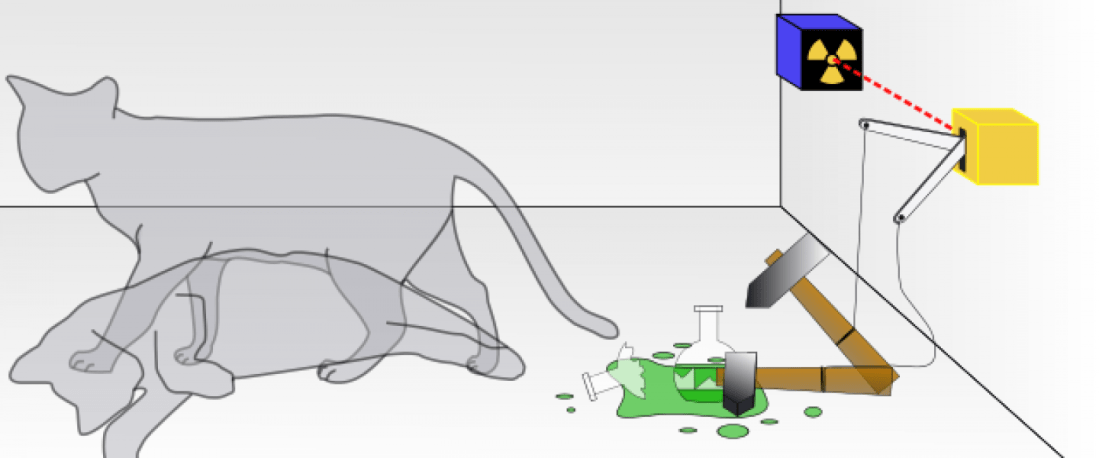
An instrumentalist Everettian
Scott Aaronson posted an interesting piece this week coming out about his favorite interpretation of quantum mechanics. I think the most relevant part is this snippet. (Although the full piece has a lot of nuance well worth reading.) I don’t mean to say that the interpretations are all interchangeable, or equally good or bad. If … Continue reading An instrumentalist Everettian
Mark Solms’ theory of consciousness
I recently finished Mark Solms' new book, The Hidden Spring: A Journey to the Source of Consciousness. There were a few surprises in the book, and it had what I thought were strong and weak points. My first surprise was Solms' embrace of the theories of Sigmund Freud, including psychoanalysis. Freud's reputation has suffered a … Continue reading Mark Solms’ theory of consciousness
The nature of splitting worlds in the Everett interpretation
This post is about an aspect of the Everett many-worlds interpretation of quantum mechanics. I've given brief primers of the interpretation in earlier posts (see here or here), in case you need one. Sean Carroll, as he does periodically, did an AMA on his podcast. He got a number of questions on the Everett interpretation, … Continue reading The nature of splitting worlds in the Everett interpretation
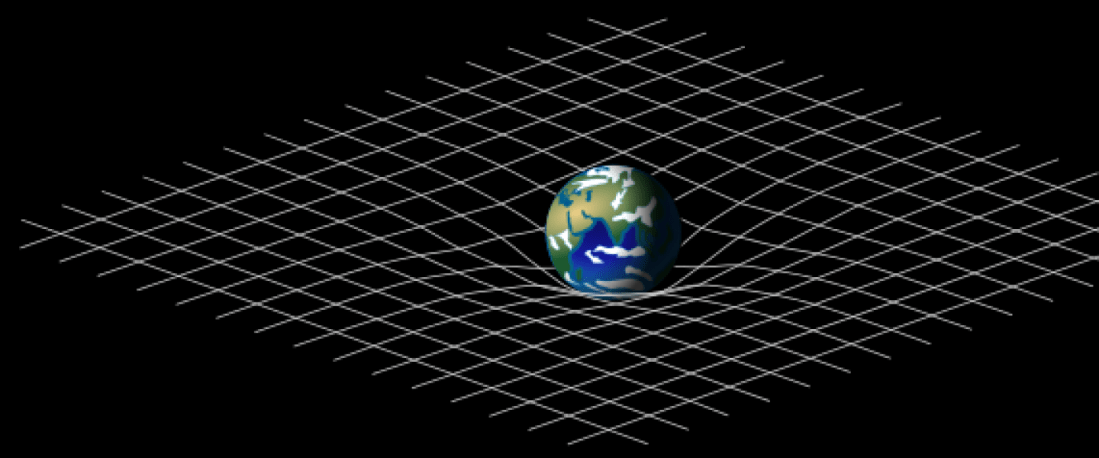
The causal criteria for being real
Ethan Siegel addresses a question on whether spacetime is real. But there’s more to the Universe than the objects within it. There’s also the fabric of spacetime, which has its own set of rules that it plays by: General Relativity. The fabric of spacetime is curved by the presence of matter and energy, and curved … Continue reading The causal criteria for being real
The right reason to doubt the simulation hypothesis
This weekend, Sabine Hossenfelder did a video and post about the simulation hypothesis, the idea that we might be living in a computer simulation. She dismisses the notion that consciousness can't be a computational simulation, which I think is correct, but then settles on the idea that physics itself can't be simulated, because we have … Continue reading The right reason to doubt the simulation hypothesis