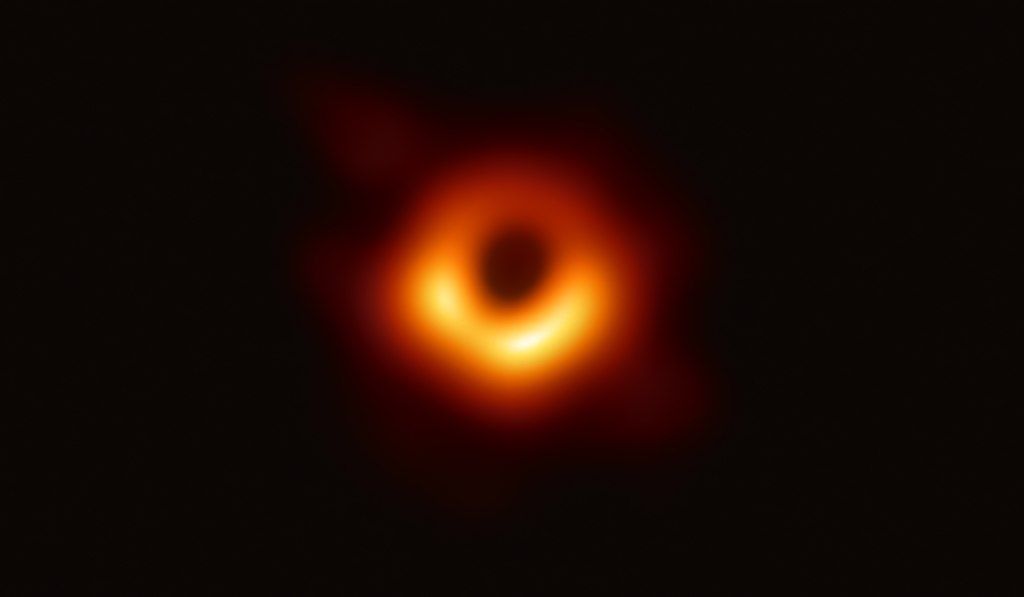
The black hole information paradox has been receiving some attention lately. This is the fact that information, that is any pattern of matter, that falls into a black hole is completely crushed as it approaches the singularity, losing whatever differentiation it might have had before. This has long been recognized as a problem, because in … Continue reading A basic question on the black hole information paradox
Tag: Science
The iron rule of science?
I'm always interested in new takes on the demarcation between science and non-science, so after seeing the New Yorker write up on Michael Strevens' new book, The Knowledge Machine: How Irrationality Created Modern Science, it seemed like something I needed to read. Strevens begins by examining the two leading theories of science: Karl Popper's falsifiability … Continue reading The iron rule of science?
The beginnings of purpose
Michael Levin and Daniel Dennett have an interesting article up at Aeon, on the right way to talk about purpose and cognition in biology, particularly in simple organisms and lower level mechanisms. The core thesis is that an organism, at any level, all the way down to a single cell, is an agent, with its … Continue reading The beginnings of purpose
David Deutsch’s version of many worlds
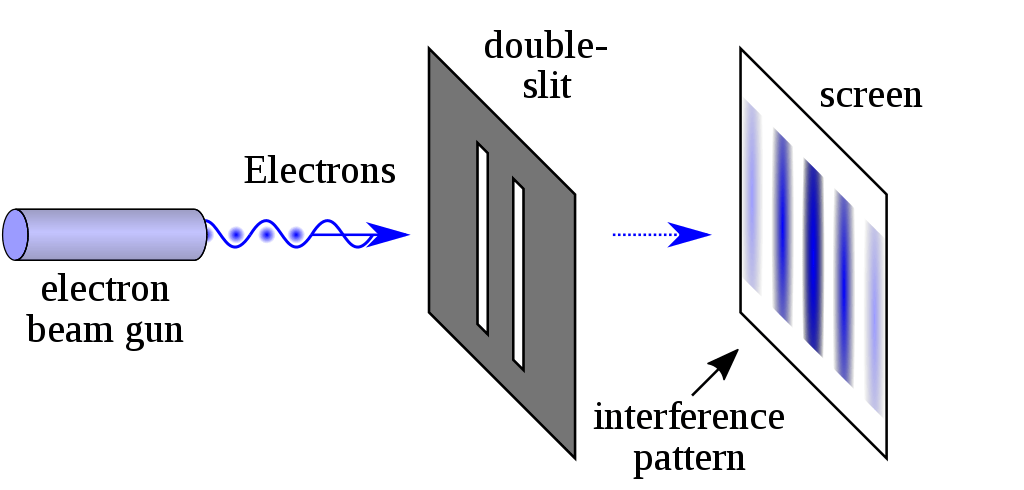
Note: I answer the questions asked here in a later post. I've written about the bizarre nature of quantum physics many times, providing a lightning primer back in May on three major interpretations: Copenhagen, pilot-wave, and many worlds. The many worlds interpretation (MWI) is often summarily dismissed by people, often along with visceral shudders or … Continue reading David Deutsch’s version of many worlds
Sapiens: A Brief History of Humankind
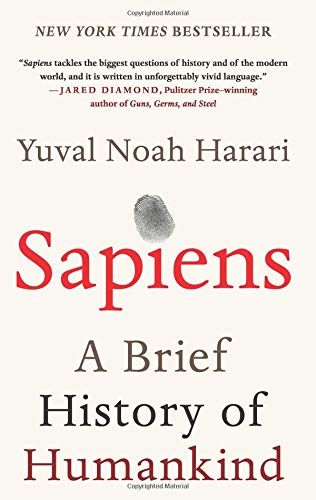
This is the final post in a series about or inspired by Yuval Noah Harari's book, Sapiens: A Brief History of Humankind. This final post is a brief summary of the overall book and some final comments. Harari's subject matter, as the title suggests, is the history of the Homo sapiens species. He breaks that … Continue reading Sapiens: A Brief History of Humankind
The mechanical philosophy and mysterianism
Noam Chomsky published an essay on his web site a few years ago: Science, Mind, and Limits of Understanding. Chomsky's thesis is that there are areas of reality that science is simply incapable of understanding. He uses as his principle example, the case of Isaac Newton's understanding of gravity. Chomsky acknowledges that this is a … Continue reading The mechanical philosophy and mysterianism
The crucial knowledge of ignorance
This is part of an ongoing series inspired by my reading of Yuval Noah Harari's Sapiens: A Brief History of Humankind. A while back, I discussed the discovery of discovery, the historical development of the idea that there were things to discover in the world, things the ancients didn't already know. Harari flips this around, … Continue reading The crucial knowledge of ignorance
The superhuman order definition of religion
This is an ongoing series of posts on topics that catch my interest as I read Yuval Noah Harari's Sapiens: A Brief History of Humankind. Religion is one of those concepts, like life, beauty, or consciousness, that are difficult to define. I used to think it was just worship of God, or gods. But many … Continue reading The superhuman order definition of religion
Hard criteria for theories of consciousness?
(Warning: consciousness theory weeds.) A new paper in the journal Cognitive Neuroscience: Hard criteria for empirical theories of consciousness, takes a shot at proposing criteria for assessing scientific theories of consciousness. The authors make clear at the beginning that they're aiming their criteria at empirical theories, rather than metaphysical ones. So they make no attempt … Continue reading Hard criteria for theories of consciousness?
Quantum Reality
I just finished reading Jim Baggott's new book Quantum Reality: The Quest for the Real Meaning of Quantum Mechanics - a Game of Theories. I was attracted to it due to this part of the description: Although the theory quite obviously works, it leaves us chasing ghosts and phantoms; particles that are waves and waves … Continue reading Quantum Reality