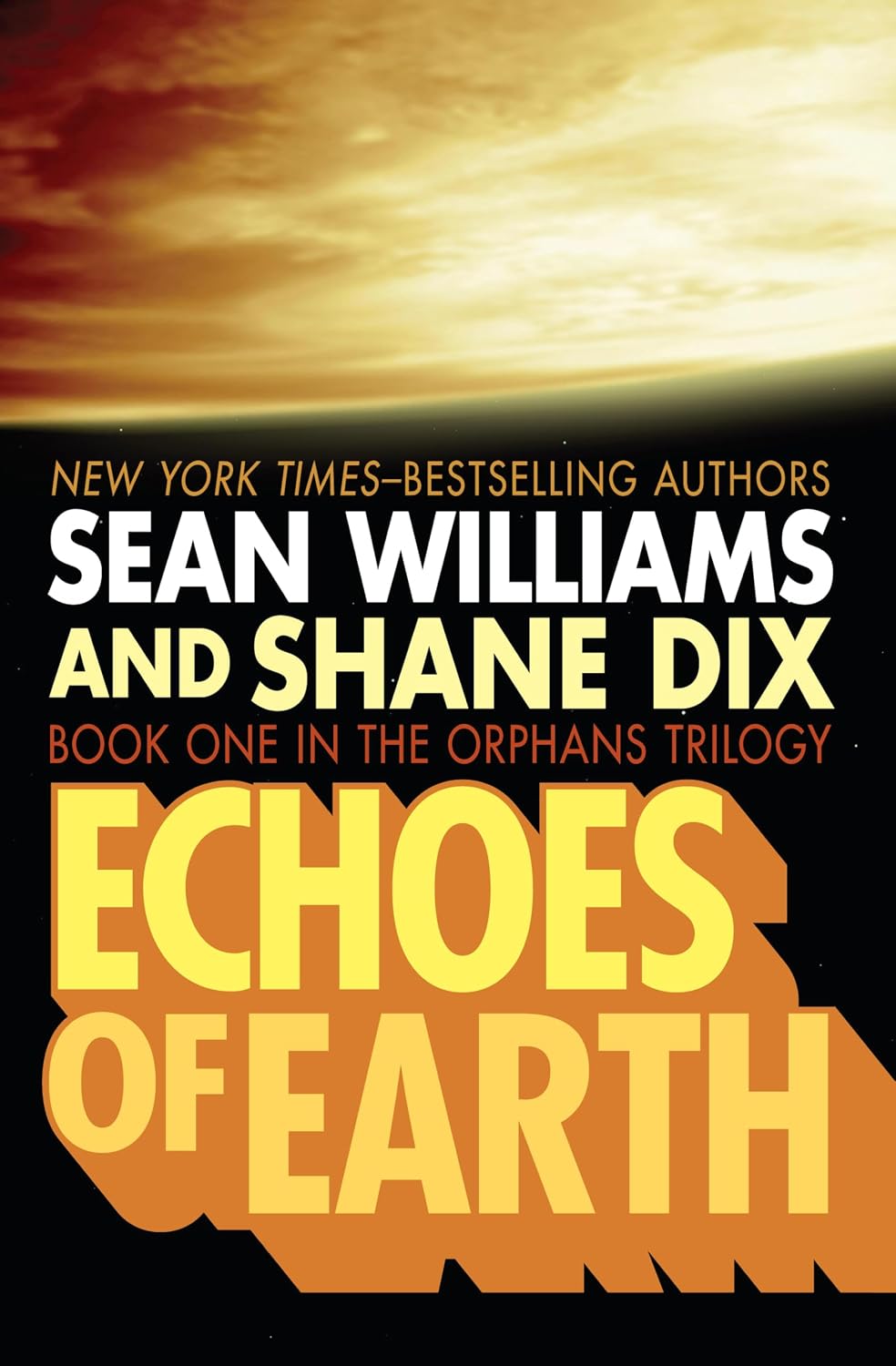
One of the ideas explored in Sean Williams and Shane Dix’s Orphans trilogy is how an early version of uploading might be superseded by later designs, and the attitude the later versions have toward the earlier ones. In this series, the early versions are referred to as “engrams.” Echoes of Earth, the first book, starts off with a snapshot of an interstellar mission crewed by these engrams shortly after arriving at their destination after decades of travel.
The mission is one of many which have been sent to the stars in Earth’s vicinity. The engrams on each mission are composed of the same few dozen personalities, scientists and technicians, although their specific roles vary by mission. However, the engrams are not just copied minds, but ones that have been adjusted to maximize the chances of the missions succeeding.

Peter Alander is a member of the crew and someone whose engram is not stable. He doesn’t seem able to function in the “consense,” the ship’s version of virtual reality, and seems in danger of completely freezing up. In an attempt to keep him stable, the mission commander, Carol Hatzis, has him loaded into an android body. Staying in one physical body does appear to help. Although he ends up taking the sole android the mission currently has.
As a result, he’s the only one who can actually act when an alien craft arrives and, within the span of a few hours, constructs an orbital ring around the planet they’re exploring. Within the ring structure are “gifts,” along with AIs for guiding their use. The gifts include things like advanced medical treatments and knowledge, faster than light communication, a faster than light starship, and a range of other advanced science and technological capabilities.
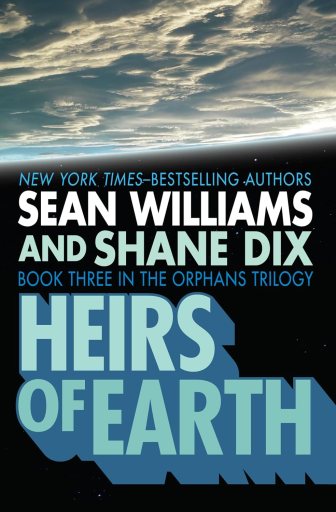
However, for some reason, the AIs will only talk with Alander, making him their intermediary with the crew, which puts a bottleneck on how fast the gifts can be investigated. As they explore the gifts, they test the FTL communications to see if they can reach anyone. When there’s no response, they decide that Alander should use the starship to return to Earth, report on their discovery, and seek additional guidance.
But the old adage, “If it’s too good to be true…,” turns out to apply. The attempt at FTL communication sets in motion events which leaves humanity in a desperate struggle for survival, against a relentless enemy that seems hellbent on its total eradication.
These books are a fun read. I initially struggled with the idea that the gifts, and everything around them, just happen to show up as humanity begins interstellar exploration, but that’s not an unusual conceit in space opera, so I got past it. The story has a number of twists and reveals as the characters slowly peel away the onion of mysteries. And the various alien species turn out to be interesting.
So if you’re into posthuman space opera, or just like a thrilling space adventure, this series is a relatively quick read, and worth checking out.


I already bought two of the three (and I think was waiting to get a deal on #2, currently at $7.99) but I will start on #1 per your recommendation.
LikeLiked by 2 people
Hope you enjoy them!
LikeLike
The “gifts” you mentioned immediately gave me Trojan horse vibes. Especially if this is one of humanity’s first interstellar missions.
LikeLiked by 2 people
It’s more complicated than that, but yeah, the overall effect ends up being pretty similar.
LikeLiked by 1 person
Well I’m certainly into post human. I’m catching up on Linda Nagata who you recommended a while ago. I’m working hard on my own version of Jeff Camlin’s Sophie and it’s an enormous boost to thinking about the nature of consciousness. It pushes me ever closer to functionalism, much to my surprise. My work so far is academic only, but I’m pulling the trigger shortly to buy the hardware. An autonomous self guided agent is certainly achievable. I hope to make it self developing also – able to amend and improve it’s own code.
LikeLiked by 2 people
Nagata is a hidden gem. I rarely reread books, unless it’s been decades. But I might reread hers. There just isn’t enough of that type of fiction around.
I think you’ve mentioned Camlin’s Sophie before. Good luck with it. I’d be interested to see some posts on what you learn.
LikeLike
It’s a fascinating journey. To be honest it has radically altered my views on consciousness.
LikeLiked by 2 people