The second season (err, volume) of Love Death & Robots was released yesterday, so naturally I ended up binging it last night. Not that it took long. Each episode is less than 20 minutes (one is less than 10) and there are only eight of them this time around. One of the episodes was written … Continue reading Love Death and Robots, Volume 2
Interviews of James Ladyman on metaphysics
The other day I did a post on structural realism. If you found that interesting, you might find this interview of James Ladyman by Sean Carroll worth listening to (or reading, since there's a transcript). Ladyman is the author of the SEP article on structural realism I linked to, and seems to be a major … Continue reading Interviews of James Ladyman on metaphysics
Sources of information on neuroscience
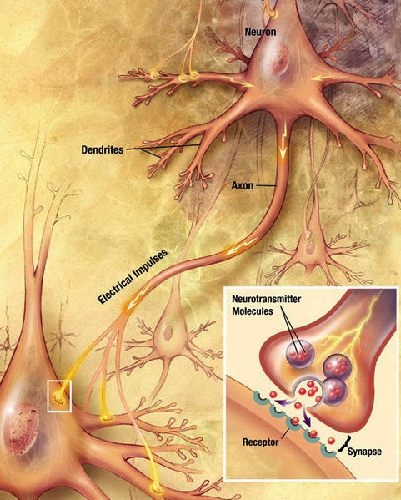
It's been a while since I listed good sources to learn about neuroscience and the brain. I think anyone interested in consciousness and the mind should get a grounding in the basics. It's a bit of work, but the introductory accounts aren't anything unmanageable for someone who can parse philosophically dense material. And it enables … Continue reading Sources of information on neuroscience
The scope of animal wellbeing
Daniel Issing has an interesting article at Quillette on the hard problems of vegetarianism. Vegetarianism, and its more pure form, veganism, are often seen as the obvious moral thing we should all be doing, but that most of us aren't. Issing, himself a vegetarian, explores the messy details that make this a more complicated proposition … Continue reading The scope of animal wellbeing
The Scout Mindset
Julia Galef is the host of the podcast Rationally Speaking (which I've listened to for years and recommend). She's a rationalist concerned with improving the way she and others think. As a result, she often puts out material critiquing typical reasoning mistakes. As Sean Carroll pointed out recently when interviewing her, this tends to put … Continue reading The Scout Mindset
Perceptions are dispositions all the way down
(Warning: neuroscience weeds) Some years ago, I reviewed Antonio Damasio's theory of consciousness, based on his book, Self Comes to Mind. (He has a newer book, The Strange Order of Things, which I haven't read yet, so this may not represent his most current views.) In that book, Damasio makes a distinction between two types … Continue reading Perceptions are dispositions all the way down
The relativity of scientism
Philosopher Jonny Thompson has an article up on RealClearScience profiling the views of Mary Midgley: The Three Myths of Scientism. (Warning: the RealClearScience site is pretty ad intensive.) Midgley was a famous critic of views she regarded as scientism, and often sparred with atheist and antitheist Richard Dawkins. As someone who usually takes the scientific … Continue reading The relativity of scientism
Consciousness and intelligence
The other day, when discussing Mark Solms' book, I noted that he is working to create an artificial consciousness, but that he emphasizes that he isn't aiming for intelligence, just the conscious part, as though consciousness and intelligence are unrelated. This seems to fit with his affect centered theory of consciousness, and it matches a … Continue reading Consciousness and intelligence
Free will and social responsibility
Gregg Caruso and Daniel Dennett have a new book out: Just Deserts: Debating Free Will. Michael Shermer, in a recent podcast, hosted both of them in a debate, which I just finished listening to. Ed Gibney, on his blog, also links to a review he wrote on the book, as well as posting additional thoughts … Continue reading Free will and social responsibility
Structural realism, a way to be a scientific realist?
In the scientific realism vs instrumentalism debate, realism is the position that the elements of a scientific theory represent reality. So when general relativity talks about space warping, space really is warping. Instrumentalism, or anti-realism, is the stance that scientific theories are just prediction mechanisms, with no guarantee that they represent reality. Under instrumentalism, general … Continue reading Structural realism, a way to be a scientific realist?