Zach Weinersmith is a man after my own heart when it comes to consciousness, as today's Saturday Morning Breakfast Cereal shows. As the consciousness is in the eye of the beholder and hierarchy of definitions guy, I feel this comic. It also resonates with Jacy Reese Anthis' conscious semanticism outlook. Click through for the original … Continue reading SMBC: Consciousness: a definition thing
Tag: Consciousness
Experiencing without knowing?

On Twitter, the Neuroskeptic shared a new paper, in which an Israeli team claims to have demonstrated phenomenal consciousness without access consciousness: Experiencing without knowing? Empirical evidence for phenomenal consciousness without access. A quick reminder. In the 1990s Ned Block famously made a distinction between phenomenal consciousness (p-consciousness) and access consciousness (a-consciousness). P-consciousness is conceptualized … Continue reading Experiencing without knowing?
Workspace vs integration: results starting to come in

A few years ago it was announced that The Templeton Foundation was funding an adversarial collaboration on theories of consciousness. The initial plan was to pit Global Neuronal Workspace Theory (GNWT) against Integrated Information Theory (IIT), although the initiative plans to move on to other theories once these have been tested. Early on, I had … Continue reading Workspace vs integration: results starting to come in
The Great Consciousness Debate: ASSC 25
This is a long video. The first hour or so features presentations on the Global Neuronal Workspace Theory by Stanislas Dehaene, Recurrent Processing Theory by Victor Lamme, Higher Order Thought Theory by Steve Fleming, and Integration Information Theory by Melanie Boly. It also has some brief recorded remarks from Anil Seth on Predictive Coding. (Fleming … Continue reading The Great Consciousness Debate: ASSC 25
Q&A on the Mind Object Identity hypothesis
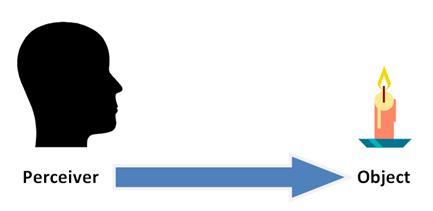
I recently did a post on Riccardo Manzotti’s interesting IAI article: There is no problem of consciousness (warning: possible paywall). In that article, Manzotti described his Mind Object Identity hypothesis. He also published a paper on this idea in 2019, which goes into much more detail. A quick recap. We make a mistake, he argues, in trying to … Continue reading Q&A on the Mind Object Identity hypothesis
The function of color

In the history of discussions about consciousness, there have always been ideas that some aspects of human experience are irreducible to physics. Colors have long had a special place in these discussions. During the scientific revolution, colors lost their status as objective properties in the world, with people like Galileo relegating them to secondary qualities … Continue reading The function of color
Do regular people see a hard problem of consciousness?
This week the latest Mind Chat episode focused on whether regular people actually perceive a hard problem of consciousness, or if it's an issue largely created by philosophers. Keith Frankish and Philip Goff interview Michelle Liu and Edouard Machery. (The video is a bit over two hours. You don't necessarily need to watch it to … Continue reading Do regular people see a hard problem of consciousness?
The urge to downplay the brain
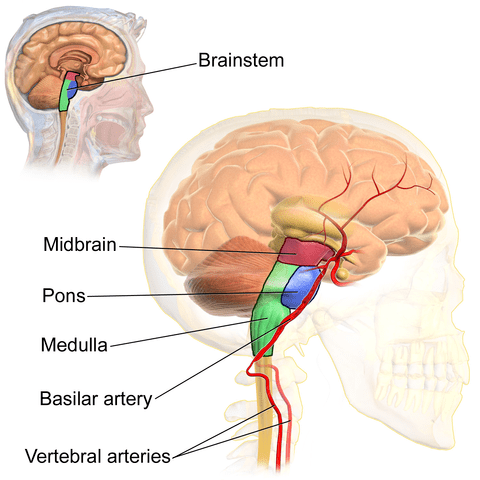
For much of human history, most people thought the seat of the soul was in the heart. There were some ancient thinkers who managed to figure out the role of the brain, but widespread acceptance of it is an early modern development from the scientific revolution. But it seems like something a lot of people … Continue reading The urge to downplay the brain
The debate between phenomenal realism and illusionism, and the scope of perceptual properties
In the last post, I pondered the idea that the real difference between a realist and anti-realist stance toward a scientific theory is about how broad or narrow the scope of the theory might be, about it's domain of applicability. An anti-realist takes a narrower view on scope; such as that the theory can be … Continue reading The debate between phenomenal realism and illusionism, and the scope of perceptual properties
Russellian monism, the same as illusionism?
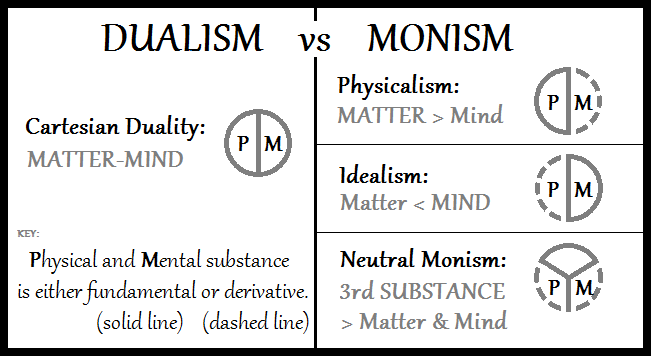
I usually have to wait for the audio version of these Mind Chat podcasts, but this one seemed a reasonable length and I had some time this weekend. Keith Frankish, an illusionist, and Philip Goff, a panpsychist, interviewed Noam Chomsky for his views on consciousness. (The video is about 72 minutes. You don't necessarily need … Continue reading Russellian monism, the same as illusionism?
 SelfAwarePatterns