Back in September (which now seems like a million years ago), I did a series of posts on consciousness inspired by Todd Feinberg and Jon Mallatt’s recent book, ‘The Ancient Origins of Consciousness: How the Brain Created Experience‘. In that series, I explored consciousness as a system modeling its environment and itself as a guide to … Continue reading Is consciousness a simulation engine, a prediction machine?
Tag: Neuroscience
The range of conscious systems and the hard problem
This is the fifth and final post in a series inspired by Todd Feinberg and Jon Mallatt's new book, 'The Ancient Origins of Consciousness: How the Brain Created Experience'. The previous posts were: What counts as consciousness? Predators and the rise of sensory consciousness Types of sensory consciousness The neural mechanics of sensory consciousness In the … Continue reading The range of conscious systems and the hard problem
The neural mechanics of sensory consciousness
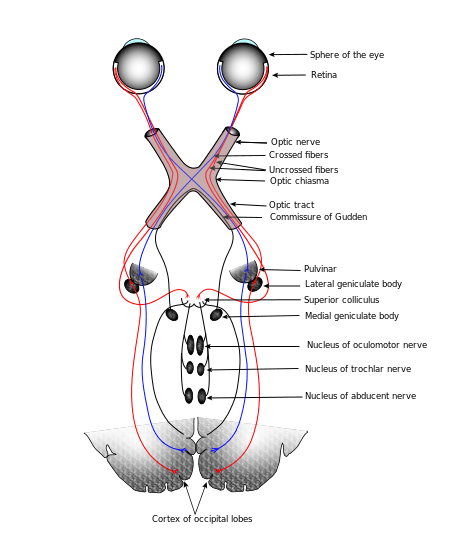
This is the fourth in a series of posts inspired by Todd Feinberg and Jon Mallatt's new book, 'The Ancient Origins of Consciousness: How the Brain Created Experience'. The first three were: What counts as consciousness? Predators and rise of sensory consciousness Types of sensory consciousness So, at this point in the series, we've talked about what … Continue reading The neural mechanics of sensory consciousness
The challenges of copying a mind
Michael Graziano has an article at the Atlantic looking at the plausibility of mind copying. He doesn't beat around the bush, going all in with the title: Why You Should Believe in the Digital Afterlife, although the actual text of the article is more nuanced, and echoes what I hear from most neuroscientists. As a neuroscientist, … Continue reading The challenges of copying a mind
Damasio’s theory of consciousness
Antonio Damasio is a neuroscientist and neurologist who has published a number of theories about how the brain and mind work. Unlike many theories of mind, his are thoroughly grounded in neuroanatomy. Central to Damasio's theory of consciousness is the idea of biological value, that which helps in preserving homeostasis, which of course aids in … Continue reading Damasio’s theory of consciousness
Books on neuroscience
Related to the last post, someone asked me where I got the information on the brain that I discussed there. After answering, it occurred to me that other people might be interested. First, let me say that the examples I gave in that post about brain module functionality were not speculative. They are well established … Continue reading Books on neuroscience
Discovering the architecture of the mind
I've written numerous times here that I tend to think that AGI (artificial general intelligence) and mind uploading are both ultimately possible. (Possibly centuries in the future, but possible.) I've also noted that we'll have to have a working understanding of the mind, how it works, how it is structured, before we can do either, … Continue reading Discovering the architecture of the mind
David Eagleman: Can a computer simulate a brain?
The other day, I highlighted the article by neuroscientist Kenneth Miller on the possibility of mind uploading. Miller saw it as possible, but thought it might be thousands or maybe even millions of years before we could do it. Here's a take by another neuroscientist, David Eagleman, being a bit more optimistic, and discussing the … Continue reading David Eagleman: Can a computer simulate a brain?
Why I think we will eventually have a scientific understanding of consciousness
It's a common sentiment, even among many staunch materialists, that we will never understand consciousness. It's one I held to some degree until a few years ago. But the more I've read about neuroscience, the more convinced I've become that we will eventually understand it, at least at an objective level. That's actually an important distinction to make … Continue reading Why I think we will eventually have a scientific understanding of consciousness
The feasibility of mind uploading
Neuroscientist Kenneth Miller has an interesting post at the New York Times discussing the feasibility of mind uploading: I am a theoretical neuroscientist. I study models of brain circuits, precisely the sort of models that would be needed to try to reconstruct or emulate a functioning brain from a detailed knowledge of its structure. I … Continue reading The feasibility of mind uploading
 SelfAwarePatterns