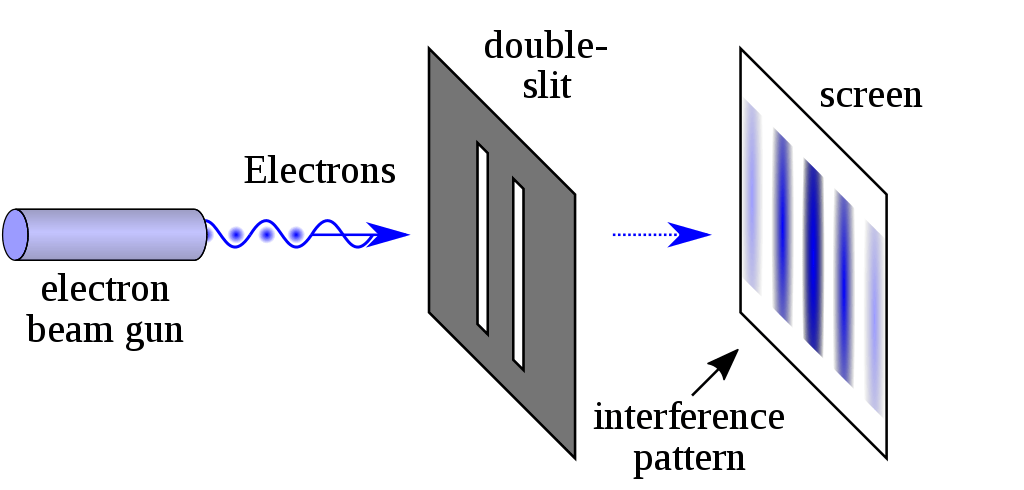
In this video, Matt O'Dowd tackles the issue of probabilities in the many-worlds interpretation of quantum mechanics. A quick reminder. The central mystery of quantum mechanics is that quantum particles move like waves of possible outcomes that interfere with each other, until a measurement happens, when they appear to collapse to one localized outcome, the … Continue reading Many-worlds, probabilities, and world stacks
Tag: Science
Integrated information theory as pseudoscience?
It's been an interesting week in consciousness studies. It started with Steve Fleming doing a blog post, a follow up to one he'd done earlier expressing his concerns about how the results of the adversarial collaboration between global neuronal workspace (GNW) and integrated information theory (IIT) were portrayed in the science media. GNW sees consciousness … Continue reading Integrated information theory as pseudoscience?
Using alternate terminology
I often use non-standard language to describe concepts, and I've had a couple of people over the last couple of years call me on it. There seemed to be a sentiment that I was confusing things, or being sneaky in some way, by not sticking to the standard nomenclature. A short post about why I … Continue reading Using alternate terminology
Is the question whether spacetime is real, or whether it’s fundamental?
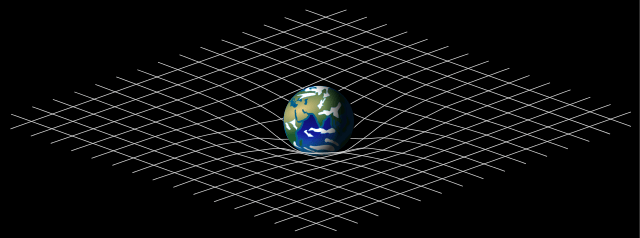
Matt O'Dowd is starting to look at a question I find extremely interesting. What is the ontology of spacetime? A lot of physicists have begun to wonder whether its fundamental, or emergent from something else. Quantum entanglement is the one I'm familiar with, but I understand there are other possibilities. (This video is 26 minutes … Continue reading Is the question whether spacetime is real, or whether it’s fundamental?
The Invention of Tomorrow
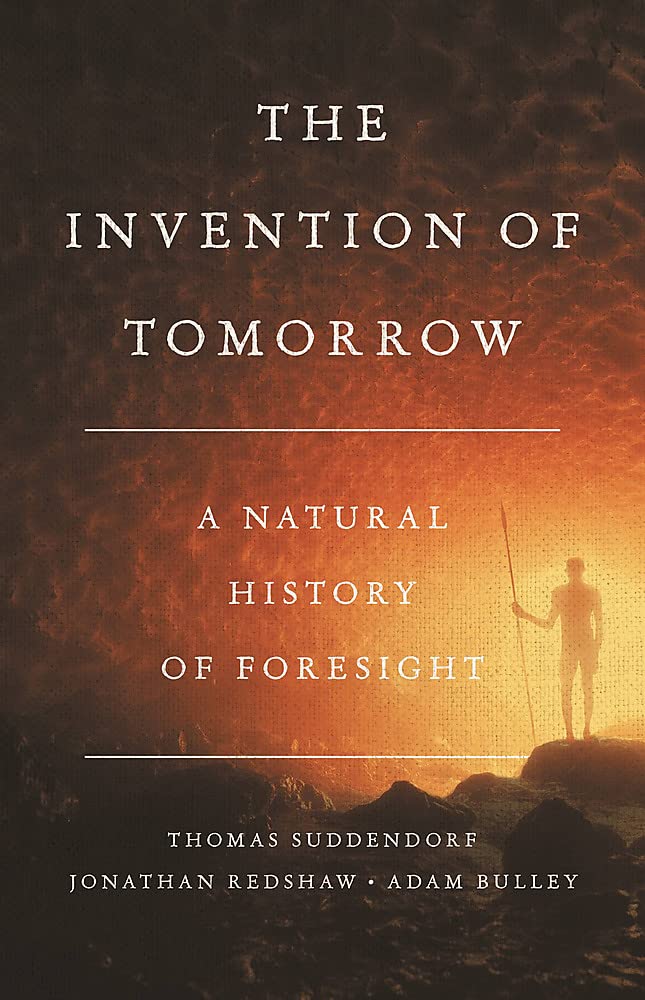
This week I read (actually listened to) The Invention of Tomorrow: A Natural History of Foresight by Thomas Suddendorf, Jonathan Redshaw, and Adam Bulley. I was alerted to the existence of this book by Sean Carroll's interview of Bulley on his podcast, which provides a good overview of their overall thesis. People have long struggled … Continue reading The Invention of Tomorrow
The debate between scientific realism and anti-realism seems like it’s about theory scope
I've been thinking again about the realism vs anti-realism debate, about what scientific theories actually tell us about the world. Historically in the philosophy of science, the debate is between realists, who see scientific theories being at least an approximate representation of reality, and instrumentalists or anti-realists, who see those theories as mere prediction frameworks … Continue reading The debate between scientific realism and anti-realism seems like it’s about theory scope
It’s not looking good for objective collapse theories
As noted in the previous post, quantum mechanics is weird. If we try to have a realist understanding of what's happening, it forces bizarre choices about which aspects of common sense reality we throw under the buss. The central mystery is the wave function collapse. Quantum particles move like waves, mathematically described by the wave … Continue reading It’s not looking good for objective collapse theories
It pays to remember that reality is absurd
Last week the Nobel Prize in Physics was awarded to Alain Aspect, John F. Clauser, and Aton Zeilinger, for their work in testing quantum entanglement, essentially validating that quantum mechanics is correct about the phenomenon, and eliminating, or at least profoundly minimizing, any possible loopholes. https://twitter.com/NobelPrize/status/1577234271546200064 Of course this set off a lot of physicists … Continue reading It pays to remember that reality is absurd
Don’t throw out Occam’s razor just yet
Jim Al-Khalili has an article at OpenMind attacking Occam's razor, at least in the form it's typically articulated, that the simplest explanation should be preferred. Al-Khalili correctly points out that there are a lot of problems with that version of the principle. Simply preferring the explanation we think is the simplest is often just favoring … Continue reading Don’t throw out Occam’s razor just yet
A way to understand quantum computing
The other day I shared a video on quantum computing, which I thought was informative, but the feedback I received is that it wasn't for anyone not already versed in the subject. Since I once struggled to understand this subject myself, I tried to think of a way of describing it that would actually help. … Continue reading A way to understand quantum computing