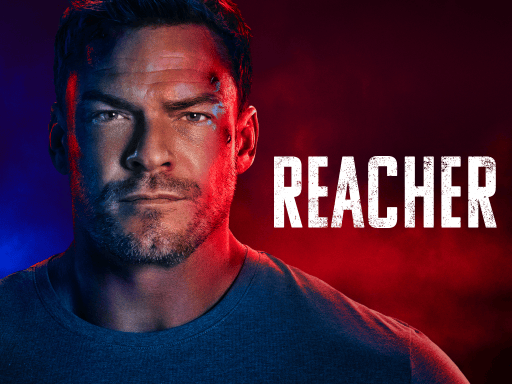
I’m pretty late to the party on this one. Lots of people have recommended the Reacher TV show for years. I finally gave it a shot, and enjoyed it a great deal. I have fond memories of the Tom Cruise movies, although I know many fans of the books felt Cruise was wrong for the part, not being tall enough. Lee Child, the author, felt he made up for it in other ways. But Alan Ritchson’s build is much closer to the book character’s “Conan the Barbarian” type physique.
The comparison with Conan works on another level. Reacher is a retired army MP who essentially wanders the earth having adventures, although his wandering, at least so far, seem confined to the continental US. Both he and other characters remark multiple times on the show that trouble seems to find him. Reacher always helps when he sees someone in trouble, and being a hulking badass, he can handle just about any immediate trouble. But the villains, in addition to being utterly ruthless and evil, always have a large organization, so Reacher typically has to reach out to allies, old army colleagues and others, which results in the stories escalating into something pretty epic.
Each season is based on one of the books. I thought the first, second, and fourth seasons were awesome. The third season wasn’t bad, but didn’t feel as satisfying.
There’s also a spinoff series: Neagley, centered on Reacher’s most trusted ally and the one he calls on the most. Neagley is a badass herself. But her show isn’t based on any books. It’s original material, and it shows. While it’s entertaining enough, the writing leans more on dumb TV tropes, like clueless cult members and characters being able to sneak around in air ducts.
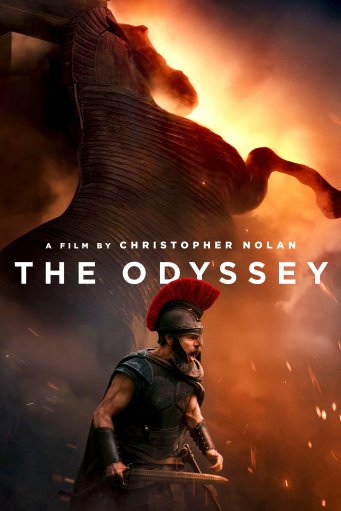
I’m late on this one as well. Early in the movie, I feared I was going to have a reaction similar to the one I had to Christopher Nolan’s previous film: Oppenheimer, which felt pointlessly frantic to me. But his style works in this one. Nolan manages to avoid the campiness infused in the old Greek mythology movies. So the cyclops and giants end up feeling truly menacing, the shades of dead characters appropriately creepy, and the gods are mostly kept offstage and inscrutable. And of course the CG and contemporary production values set a new standard for this type of movie. I do think the attitudes of the characters are a bit too modern, and too aware that they’re in the Bronze Age collapse, but it’s a fantasy and those concerns weren’t enough to spoil the thrill, at least for me.
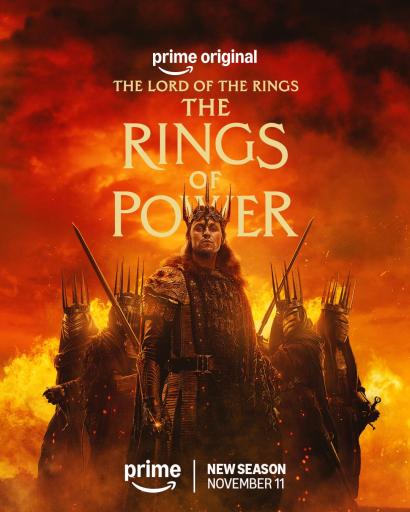
The Rings of Power show seems to have recovered from its first season viewership travails, although it’s still fashionable among online reviewers to hate on it. But while I’m not always wild about the decisions it makes in how it adapts the source material, as a long time Tolkien fan, I’m still enjoying it a great deal. We have to remember that it’s surfacing stories previously unknown to anyone except Tolkien nerds like me who had read the appendices of The Return of the King and The Silmarillion. Changes to make this background material work for TV are inevitable. (And many upset fans today seem unaware of just how much Peter Jackson changed The Lord of the Rings to work for audiences at the time.)
That said, I wasn’t thrilled with the way the proto-Nazgul were handled, although it’s probably inevitable given earlier decisions the show made. And the forging of the one ring could have been handled better. I’m not sure the sequence adequately conveys how much of himself Sauron had to pour into the ring, so that it’s clear later how it both protects him, but also becomes his greatest vulnerability. And the sheer power of the Numenorean forces as described by Tolkien seemed downplayed.
It will be interesting to see how the show handles events in the fourth season. Those of us who’ve read the “Akallabêth” know what’s coming, but I wonder just how much of the Undying Lands we’ll get to see.
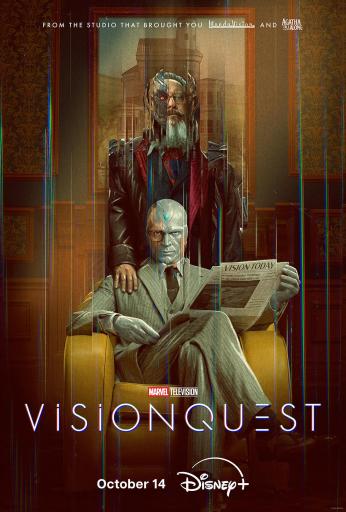
I wasn’t impressed with WandaVision; it had its moments but only after taking way too long before giving us clues on what was happening. It did set up the situation well for Doctor Strange in the Multiverse of Madness which I thought was pretty fun. But I felt sufficiently burned that I skipped Agatha All Along. When VisionQuest came out, I decided to at least try the first episode and was pleasantly surprised.
This show is about the resurrected version of Vision, who is now in hiding while he tries to figure out who he is. What makes things interesting is he has an entire virtual household in his mind, complete with other AIs including Jarvis from the early Iron Man movies. It also includes a copy of Ultron, the villain from Avengers: The Age of Ultron, although the years the character has spent trapped in the virtual house’s attic seem to have changed him. He now seems more sympathetic although his actual alignment remains unclear.
Vision’s contemplations are disturbed when he is attacked in the real world by Paladin, a mysterious bounty hunter hired by someone to capture him. What follows is an exploration of the Marvel universe’s version of AI, an exploration which ultimately goes back to the earliest Marvel characters. I thought it was pretty fun, although it might be confusing if you’re not already versed in Marvel lore.
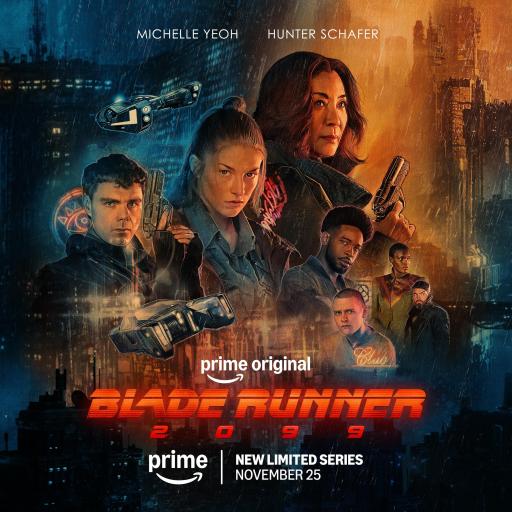
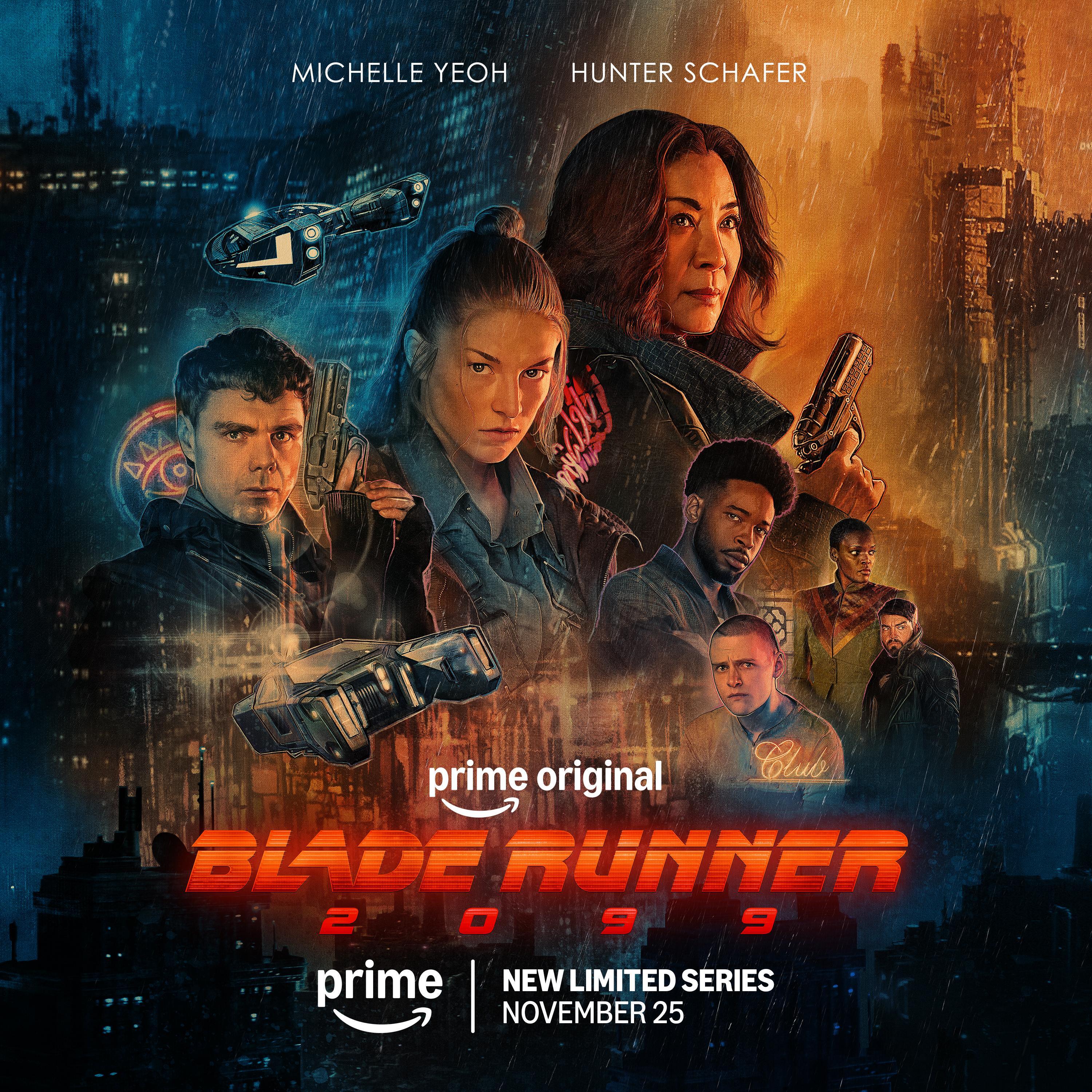
I have to admit that when I first saw the original Blade Runner movie, my teenage self wasn’t enamored. It was ok, if a bit depressing and slow paced. I didn’t really appreciate its existential themes until I was well into adulthood. I did enjoy Blade Runner 2049 by the time it came out. By 2017, the dystopian bleakness worked for me.
Blade Runner 2099 obviously takes place much later. Although there’s a prologue set several years before the original movie (set in 2019), and where the overall dystopian feel is already in place. Clearly at this point we’re dealing with an alternate timeline, one that likely diverged from ours before the 21st century, maybe in 1982, when the original movie came out, although the technological advances make it seem more likely it was earlier.
By the events of this show, things have changed. The replicants have taken over and flipped things around, with humans now the underclass. There are still Blade Runners, but now they’re replicants looking for fugitive humans to either kill or ship to off world colonies, which are implied to be brutal environments. Cora, the main character, is a human on the run. When her current cover is blown, she approaches an identity counterfeiter who can only help her if she can retrieve something for another client, but what the client wants is in the custody of the blade runners, requiring that Cora pass as a replicant and blade runner.
Owen is a blade runner with only days left before her body expires and she dies. She’s already having issues with her fingers seizing up. She discovers that another blade runner she was close to has gone missing, and begins searching for him. Cora ends up falling in with her when its discovered that Marek, the missing blade runner, has the item Cora needs to recover.
Much of the show is Cora desperately trying to maintain her cover. There are numerous times where it seems clear it’s blown, but the replicants lack of empathy often makes them blind to the clues that she’s not who she claims to be. And the show has an updated version of the Voight-Kampff test, similar to the one in 2049, which is used to ensure the replicants aren’t getting too empathetic with their human targets. A new innovation is that the test is given by a young human girl, managing to make the whole thing creepier.
The show is billed as a limited series, although it leaves a lot of loose threads at the end, so there could either be additional seasons or a sequel series. My attitude toward it will be different if those threads are never addressed. My biggest current knock against it, a common one for these types of franchises, is that the world is pretty much identical to the one of 2019 except that the replicants are now in charge. We have the same flying cards, video technologies, pyramid buildings, flaming smokestacks, gigantic video billboards with their creepy ads, and all the rest. Eighty years seems like a long time for nothing along those lines to change, even in a dystopia. One thing I do like is we do get to see more of the world, both outside the city and how most people live. Although I would love to see more about the off world colonies; the whole franchise has kept them offstage.
Anyway, while far from perfect, I found the show entertaining enough.
That’s what I’ve been watching lately. Seen any of it? If so, what did you think? Watching anything else interesting?

