Optimism for interstellar exploration

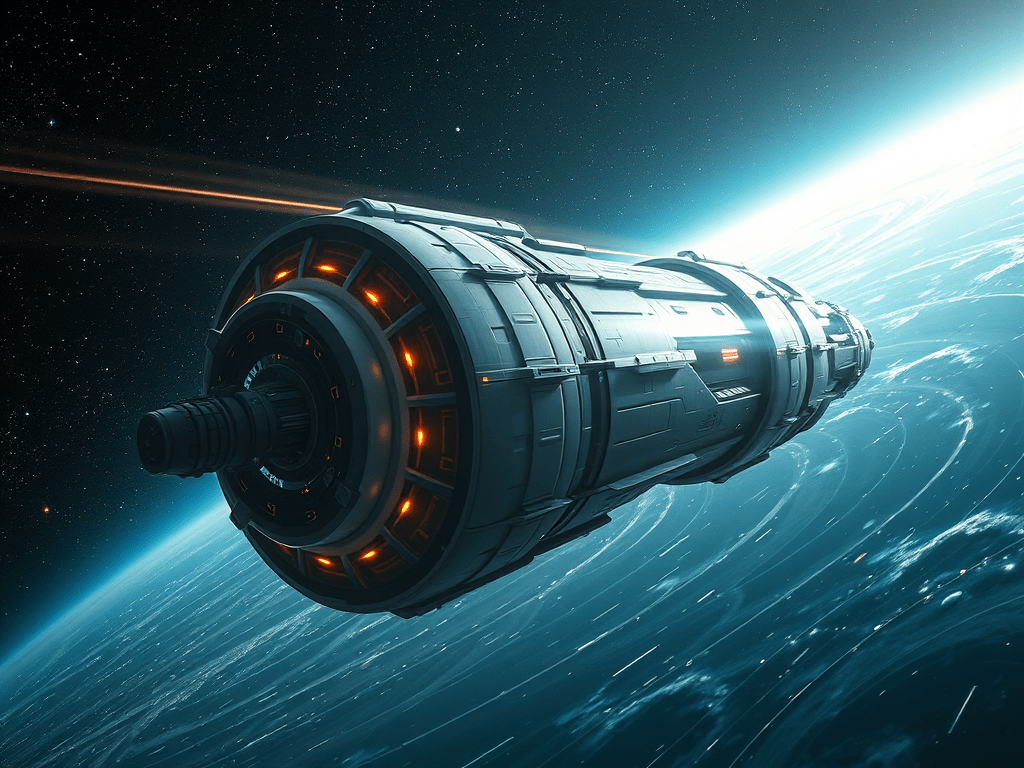
There's been some attention lately to a contest on designing an interstellar generation ship, a large scale ship that humans live in for generations while it crosses interstellar space to another solar system. As Paul Gilster at Centauri Dreams notes, generation ships are a long time staple in science fiction, albeit with the common trope … Continue reading Optimism for interstellar exploration

The difficulty of going to Mars

There's been a lot of celebration this holiday season of the fiftieth anniversary of the Apollo 8 mission, the first time humans went into (relatively) deep space and orbited another body, the moon.  I'm glad to see Apollo 8 getting some recognition.  It's usually overshadowed by Apollo 11, the first mission to actually land on … Continue reading The difficulty of going to Mars

The difficulty of interstellar travel for humans

Futurism.com has an article reviewing the results of a survey they conducted with their readers asking when the first human might leave the solar system.  The leading answer was after the year 2100, which make sense given our current level of progress just getting humans back out of low Earth orbit.  But I think the … Continue reading The difficulty of interstellar travel for humans

David Eagleman: Can a computer simulate a brain?

The other day, I highlighted the article by neuroscientist Kenneth Miller on the possibility of mind uploading.  Miller saw it as possible, but thought it might be thousands or maybe even millions of years before we could do it.  Here's a take by another neuroscientist, David Eagleman, being a bit more optimistic, and discussing the … Continue reading David Eagleman: Can a computer simulate a brain?

NASA has never accidentally sent a probe into the Sun.

Last week, I was having lunch with some friends, which included a number of programmers.  One of them mentioned an old urban myth, that I hadn't heard in several years, which claims that, due to a programming bug (involving a misplaced semicolon), NASA once accidentally sent a probe into the Sun.  I pointed out to my friend how implausible this was. … Continue reading NASA has never accidentally sent a probe into the Sun.

Interstellar: more accurate than the typical sci-fi movie, but still had issues

This week, I watched the movie Interstellar, the Christopher Nolan film about travel to another galaxy, a black hole, a wormhole, and other exotic environments.  I enjoyed it immensely, although I also had some issues with it. In the film, at some point in the future, the Earth is dying due to a global crop blight. … Continue reading Interstellar: more accurate than the typical sci-fi movie, but still had issues

xkcd: Spacecraft and launch vehicle payloads, in horses

  Similar to the relative spacecraft and rocket sizes I linked to the other day, here's xkcd's version, in horse units.  At first I thought he was referring to horsepower, but then I realized it was horse mass.  (Click through for full sized version.) via xkcd: Payloads. It's worth noting how large the Saturn V and … Continue reading xkcd: Spacecraft and launch vehicle payloads, in horses

The movie ‘Interstellar’ and wormholes

The other day, I did a post on interstellar exploration which linked to one by Sten Odenwald on the problems with interstellar travel.  Well, he posted some follow-up remarks, expressing some surprise at the response, doubling down on the aspects of the limitations of interstellar travel he identified, and urging people to be optimistically realistic.  (I predict he'll get … Continue reading The movie ‘Interstellar’ and wormholes